
Ecommerce AEO Expert for Product and Category Answers
Shoppers now ask AI which product to buy, not just where to buy it. An ecommerce AEO expert makes your products, prices and reasons to choose them clear enough for AI engines to recommend.
- Product, Offer and review markup that matches the page
- Merchant Center and product feeds kept accurate
- Buying guides and comparison pages built for shopping questions
Best trail running shoes for wide feet under $150?
For wide feet, runners often recommend models with a roomy toe box...
1ridgeline-footwear.exampleWidth options in product data
the source AI citesWhat an Ecommerce AEO Expert Does
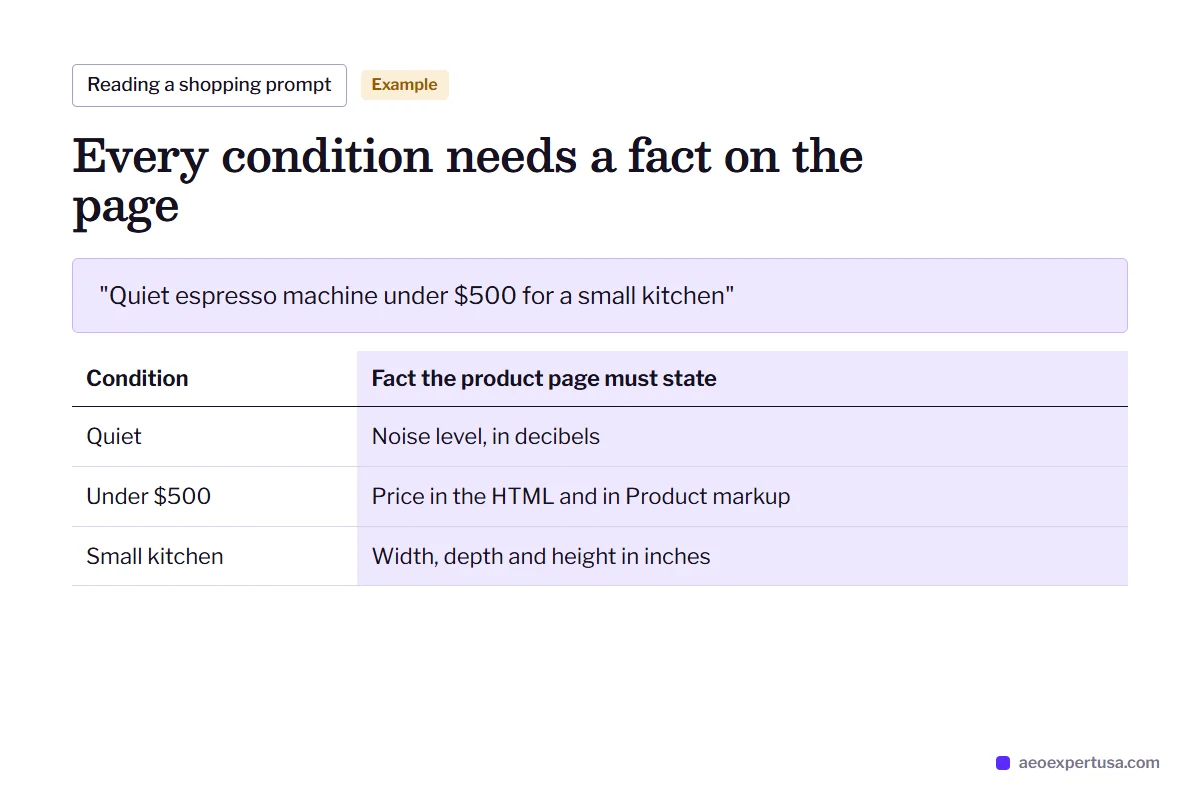
An ecommerce AEO expert gets a store's products named and linked when shoppers ask AI engines what to buy. Shopping questions in ChatGPT, Perplexity, Copilot and Google AI Mode are usually comparisons with conditions: best X for Y, under a price, compared with Z. The engines answer by combining product data, reviews, buying guides and retailer pages.
That means two kinds of work. The first is data: structured data, product feeds and on-page specifications that state price, availability, sizes, materials and policies in a form machines read without guessing. The second is reasons: guides, comparisons and category copy that explain who each product suits, which is what an AI needs to recommend it for a specific shopper.
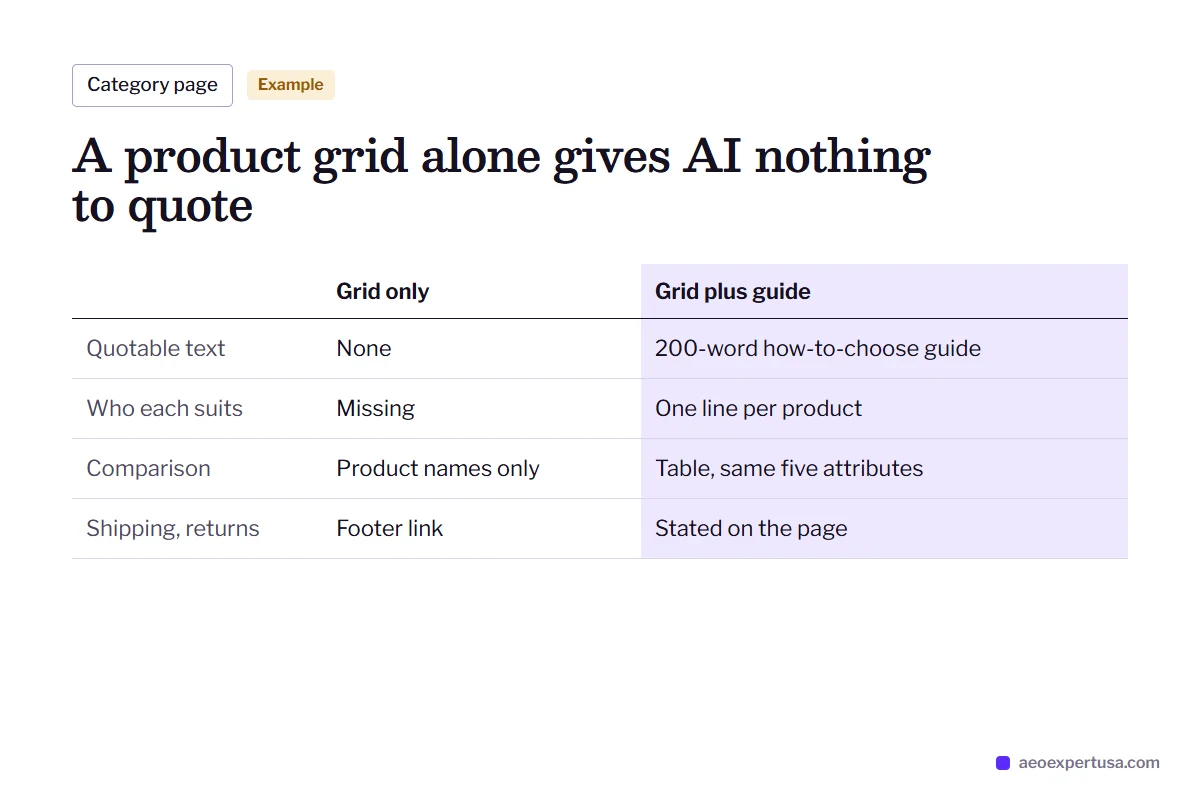
Most stores have the first half partly done by their platform and the second half missing. Category pages that are only a product grid give an AI engine nothing to quote.

Ecommerce AEO Work by Page Type
Product pages
Specs in HTML text, who it is for, sizing help and answers to the questions buyers ask support.
Category pages
A short buying guide above or below the grid: how to choose, and which products suit which needs.
Buying guides
Guides that answer best-for and how-to-choose questions with real product recommendations.
Comparison pages
Your product against alternatives, in tables with the same attributes for each.
Policies
Shipping and returns stated plainly and marked up, since shoppers ask AI about them.
Feeds
Merchant Center feeds that match the site, so Google's shopping surfaces and AI Mode see the same facts.
Product Schema an Ecommerce AEO Expert Checks
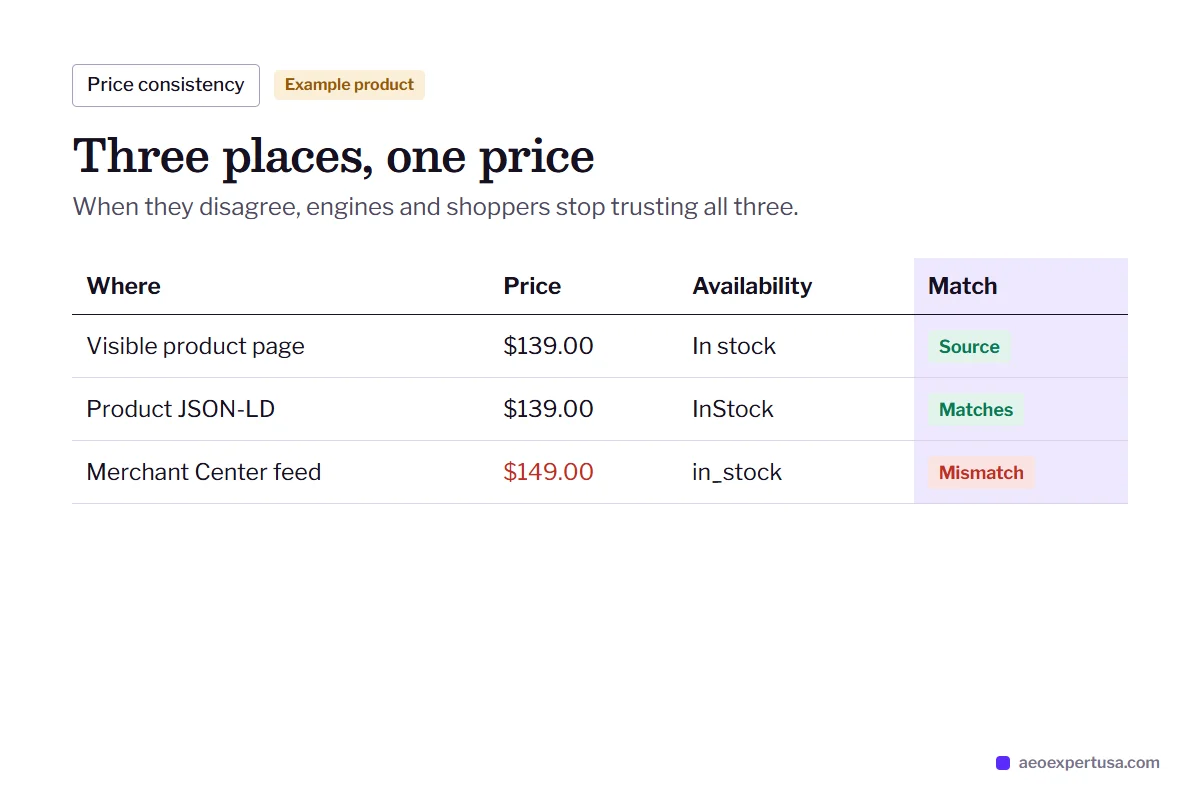
Product markup is where most stores leak. Platform themes often output partial data, apps add a second conflicting block, and prices in the markup drift from prices on the page. Google's <a href="https://developers.google.com/search/docs/appearance/structured-data/product">product structured data guidance</a> sets the rules.
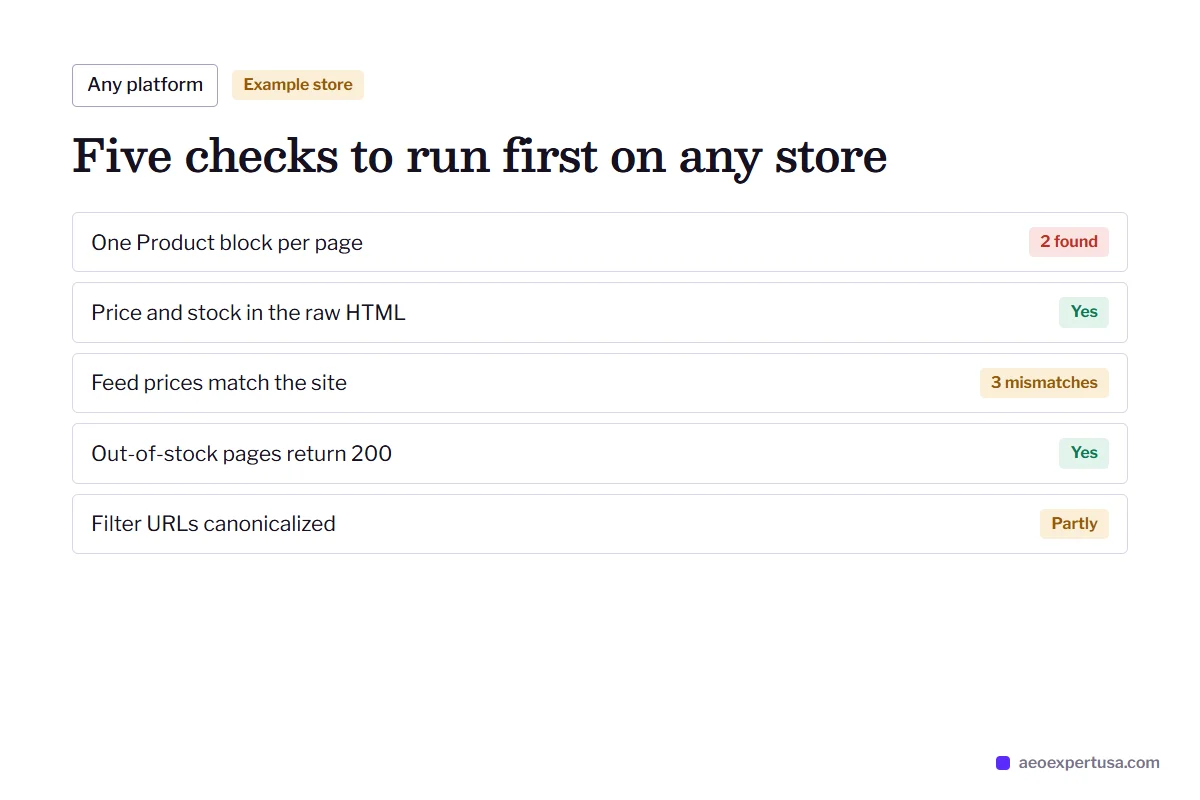
- One Product block per page, not one from the theme and one from an app
- Offer price, currency and availability matching the visible page
- Ratings marked up only when they come from real customer reviews

Problems the Best AEO Experts in Retail Fix First
What stores get wrong
- Faceted filter URLs eat crawl budget while key products go uncrawled.
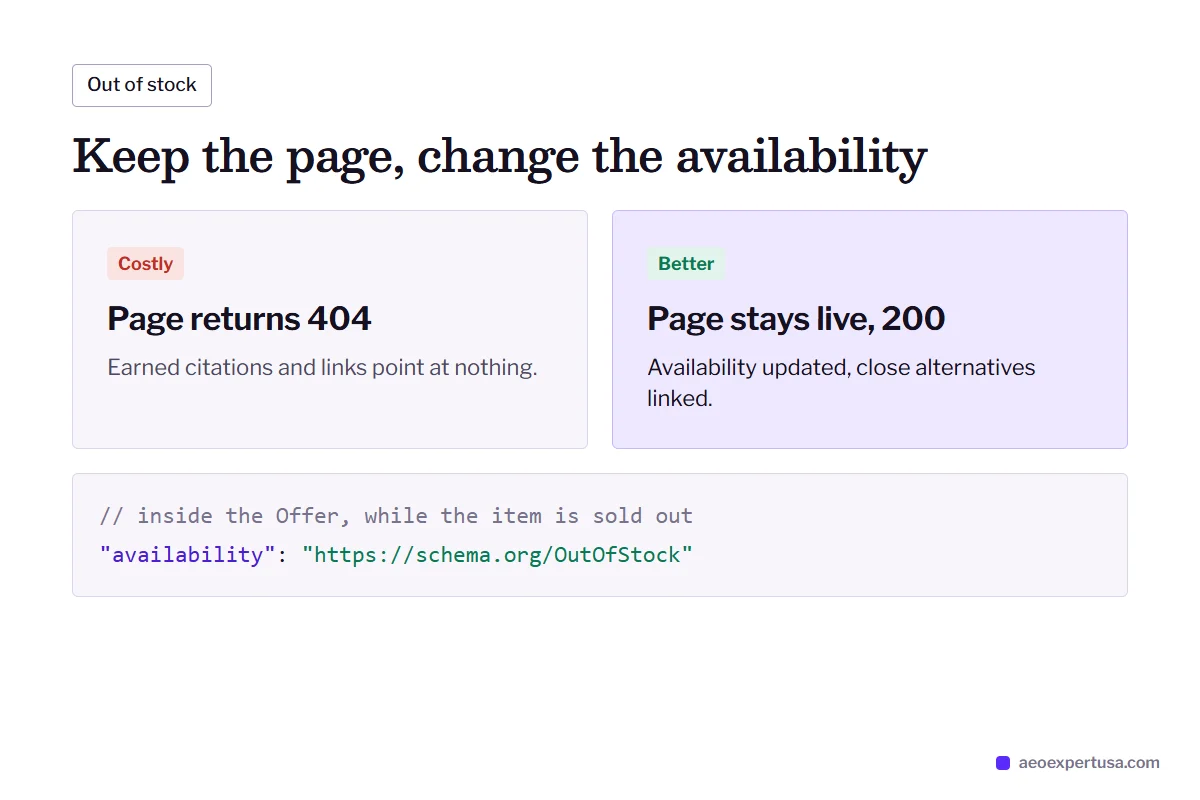
- Out-of-stock pages return 404, losing citations they had earned.
- Product descriptions copied from the manufacturer, identical to every other seller.
- Prices and stock loaded by JavaScript, invisible to some crawlers.
What gets done
- Filter URLs controlled with canonicals, robots rules and internal linking.
- Out-of-stock products kept live with availability updated and alternatives linked.
- Descriptions rewritten with your own fit notes, use cases and buyer questions.
- Price and availability included in the server-rendered HTML and the markup.

E-commerce AEO Expert Help by Platform
Each platform handles schema, feeds and rendering differently.

How to Hire Ecommerce AEO Experts: What Happens
Shopping prompt test
Week 1Your top product questions run in each engine, recording which stores and products are named.
Data cleanup
Weeks 1 to 4Product markup, feeds and server-rendered prices fixed, template by template.
Guides and categories
Months 1 to 3Buying guides, comparison pages and category copy written for the questions you lost.
Measure
MonthlyPrompts re-tested and AI referral revenue tracked in GA4 alongside Search Console product queries.
Ecommerce AEO Expert FAQs
How do AI engines decide which products to recommend?
They combine product data, reviews and editorial content such as buying guides and comparisons. Products with clear specifications, consistent prices and written reasons to choose them are easier to recommend for a specific need.
Does Merchant Center matter for AI shopping answers?
For Google, yes. Merchant Center feeds supply product data to Google's shopping experiences, and keeping them accurate and consistent with your site avoids conflicting facts. Other engines rely more on your pages and third-party reviews.
Should out-of-stock products be deleted?
Usually not. Keep the page live, mark it out of stock in the markup and on the page, and link alternatives. Deleting it throws away any links and citations it had earned.
Can we add review stars to product markup from any source?
No. Rating markup should reflect genuine reviews of that product shown on the page. Marking up reviews you did not collect, or ratings that are not visible, breaks Google's guidelines.
What does it cost to hire an ecommerce AEO expert?
It depends on catalog size and how much of the work is template fixes versus new guides. You get a fixed quote after the free audit; see pricing for how quotes are built.
Get a Free Ecommerce AEO Audit
See which stores AI engines recommend for your products today, and what your product data is missing.
- Delivered in 48 hours
- Product markup checked
- No obligation
Request your free AEO audit
Takes 30 seconds. You get a real audit, not a sales sequence.
Make AI recommend your business, starting this week
Hire an AEO expert who works from your data, not guesses.