
Technical AEO for Crawlers, Rendering, Schema and Entities
Technical AEO makes sure AI crawlers can fetch your pages, read the content without running scripts, and understand who you are from your structured data. It is the layer content teams cannot fix on their own.
- Per-crawler access across robots.txt, CDN and firewall
- Server-rendered HTML for every page you want quoted
- Structured data and entity markup that validate
What Technical AEO Covers
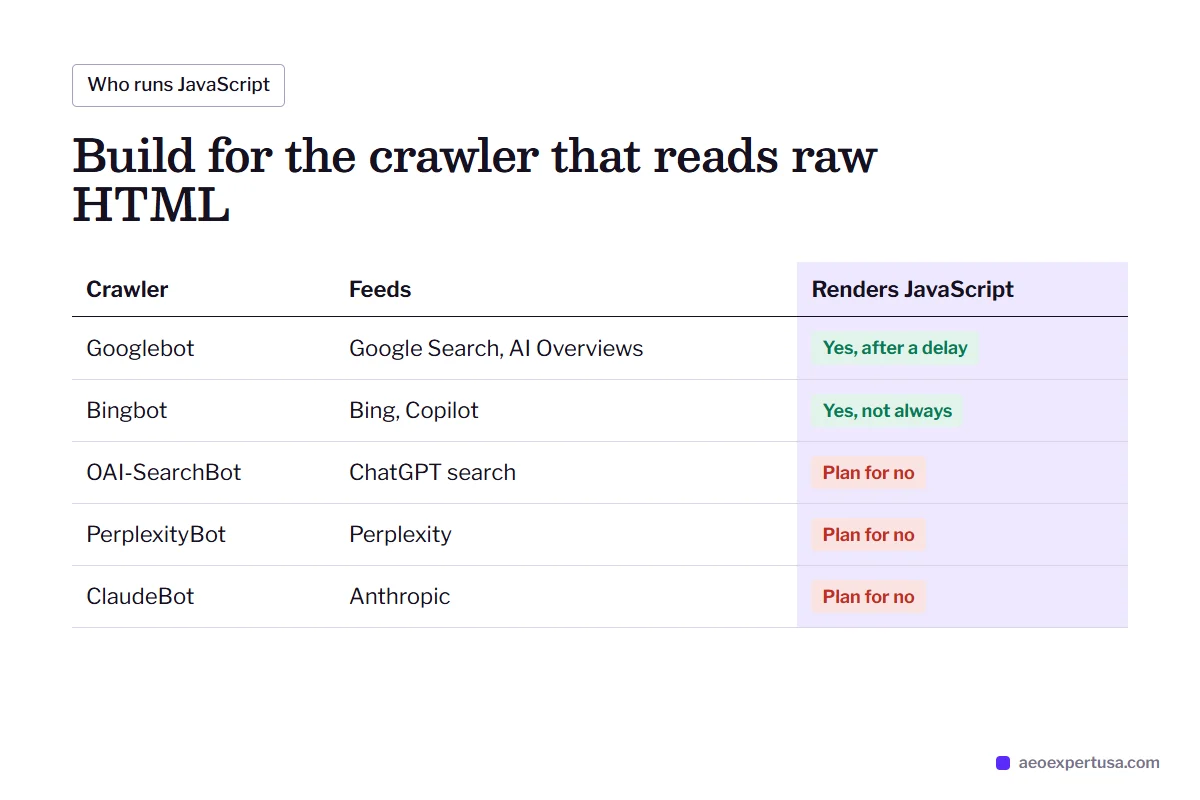
Technical AEO is the set of site-level fixes that let AI systems crawl, read and correctly interpret your pages. It overlaps with technical SEO, but the audience is wider: besides Googlebot and Bingbot, it has to work for OAI-SearchBot, ChatGPT-User, PerplexityBot and ClaudeBot, which behave differently.
The biggest difference is rendering. Googlebot runs JavaScript; many AI fetchers do not, or do so only partly. A site that ranks well in Google can still look empty to the engines that read raw HTML. The second difference is identity: AI answers name companies, so markup and consistent facts that tell machines exactly who you are carry more weight than they did for blue links.
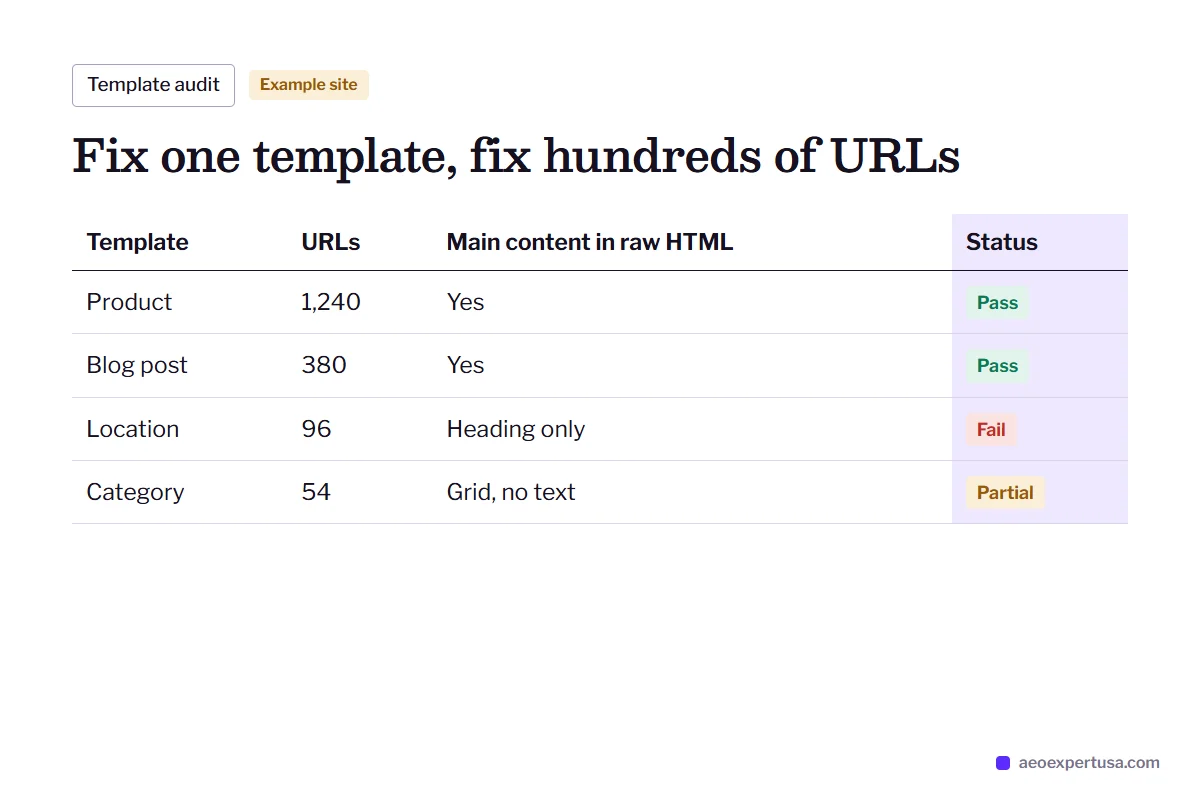
A technical AEO expert audit looks at templates, not just pages. Fixing one product template or one blog layout often fixes hundreds of URLs at once.

Technical AEO Expert Checks
Crawler access
robots.txt, CDN bot rules, rate limits and WAF logs, checked separately for each AI user agent.
Rendering
Raw HTML compared with the rendered page for every major template, with gaps listed by section.
Structured data
JSON-LD for Organization, Product, Service, Article and LocalBusiness, validated and matched to visible content.
Discovery
XML sitemaps with honest lastmod dates, IndexNow for Bing, and internal links to every answer page.
Mobile parity
Google indexes the mobile version, so content hidden or trimmed on mobile is content you lose.
Canonicals and duplicates
One clear URL per answer, so signals and citations are not split across copies.

Technical AEO for Entities: Organization Markup
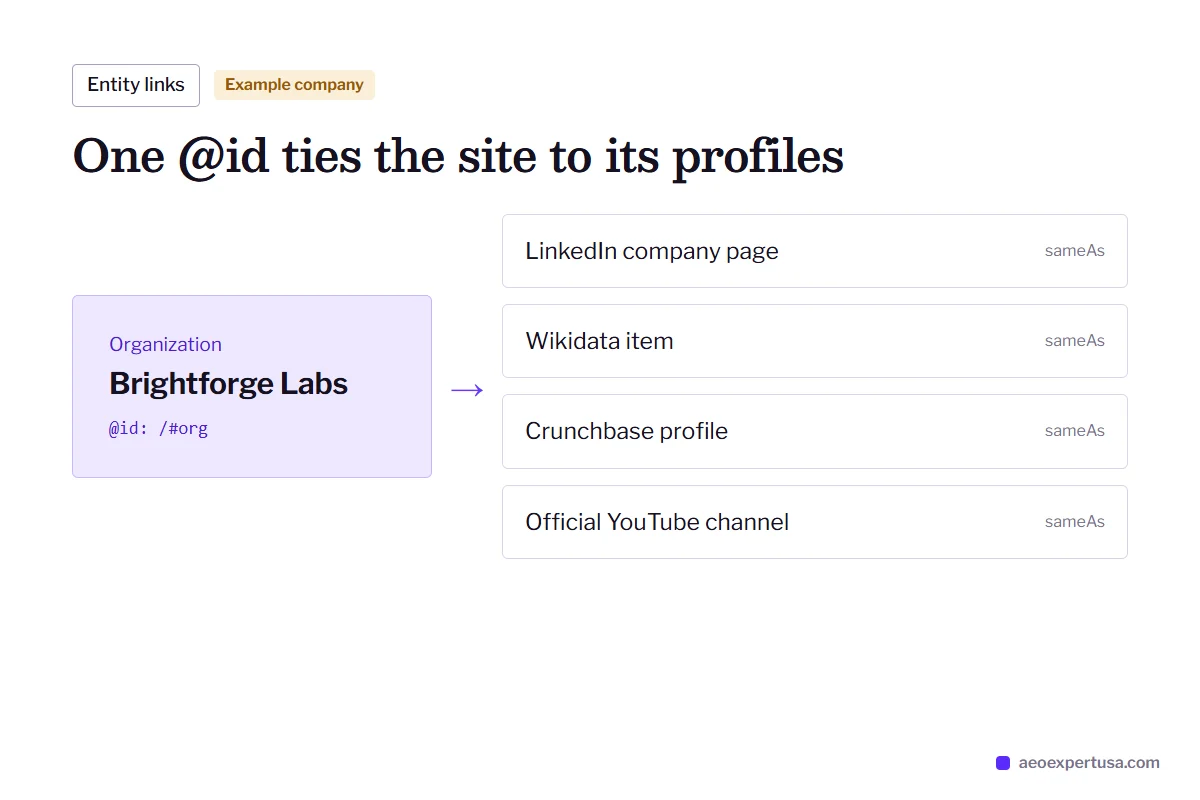
AI engines need to connect your website with your profiles, reviews and mentions elsewhere. Organization markup with sameAs links does that in a form machines read directly, using vocabulary from schema.org.
- One Organization block, site-wide, with a stable @id
- sameAs links to official profiles only
- Names, addresses and descriptions matching what the page shows

Server vs Client Rendering for Technical AEO
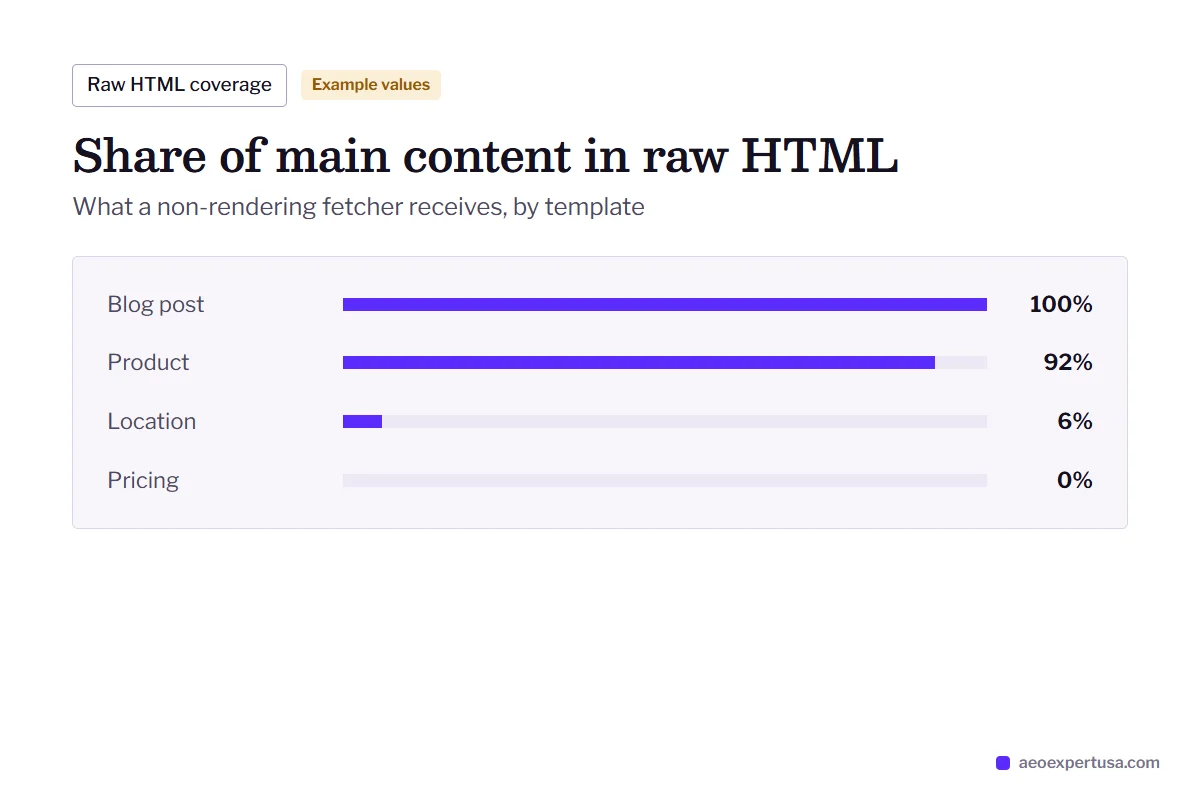
What each AI fetcher is likely to see, depending on how the page is built.

Programmatic AEO: When Templated Pages Help and Hurt
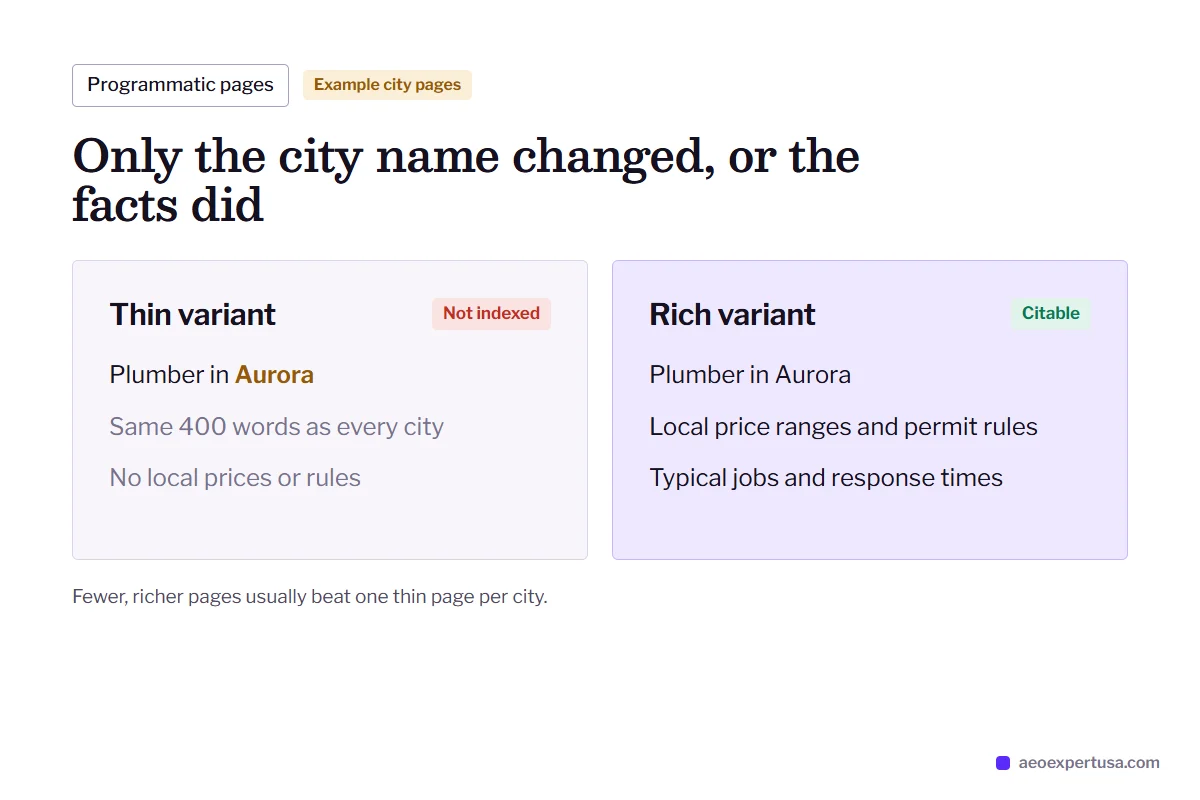
Programmatic pages, such as one page per city, integration or product variant, can be strong AEO assets when each page carries data nobody else has: real local prices, real compatibility details, real specifications. A programmatic AEO expert makes sure every generated page earns its place with unique facts.
They hurt when the only thing that changes is a name in the heading. Google tends to leave such pages in Crawled - currently not indexed, and AI engines have no reason to cite one copy over another. The fix is usually fewer, richer pages, a clear canonical, and internal links that point to the strongest version.

How the Technical AEO Expert Audit Runs
Crawl and fetch
Days 1 to 3Each template fetched as different crawlers, with and without JavaScript, plus a log sample if available.
Validate
Days 3 to 5Structured data, canonicals, sitemaps and Search Console reports checked against what the page shows.
Write tickets
Week 2Developer-ready tickets with the template, the problem, the exact change and how to test it.
Re-check
After releaseFixes verified after release, in logs, URL Inspection and live engine tests.
Technical AEO FAQs
What is technical AEO?
Technical AEO is the site-level work that lets AI crawlers reach, read and understand your pages: crawler access, server-rendered HTML, structured data, canonicals and discovery. It is the foundation the content and PR work sits on.
Do AI crawlers run JavaScript?
Googlebot does. Many AI fetchers either do not or do so inconsistently, so the safe approach is to put the main content in the HTML the server sends. Checking a page with scripts turned off shows quickly what those crawlers receive.
Is llms.txt part of technical AEO?
It can be, as a small optional extra. It is a proposed standard and no major engine has confirmed using it, so it never replaces crawlable HTML. The llms.txt validator checks one if you have it.
Will you work with our developers?
Yes. Most technical AEO fixes are shipped by your own developers from precise tickets. If you prefer, changes can be made directly with the right access.
Does page speed matter for AI engines?
It matters indirectly. Slow or failing responses waste crawl requests and can leave a fetch incomplete, and Google uses page experience signals in Search. A Core Web Vitals fix covers the speed side in depth.
Get a Free Technical AEO Check
See what AI crawlers receive from your key templates, and which technical fixes would change it.
- Delivered in 48 hours
- Template-level findings
- No obligation
Request your free AEO audit
Takes 30 seconds. You get a real audit, not a sales sequence.
Make AI recommend your business, starting this week
Hire an AEO expert who works from your data, not guesses.