
Enterprise AEO Expert for Large Sites, Brands and Markets
At enterprise scale, AI visibility is less about one page and more about policy, data and coordination. An enterprise AEO expert works with your SEO, content, engineering, security and legal teams so AI engines can reach, read and correctly describe every brand you run.
- One AI crawler policy agreed across security and marketing
- Search Console, logs and GA4 analyzed at full scale
- Tickets and playbooks your teams can ship
What an Enterprise AEO Expert Adds to an In-House Team
An enterprise AEO expert brings focused AI search knowledge into an organization that already has SEO, content and engineering people. The aim is not to replace them. It is to give them a clear AI visibility plan, the analysis to back it, and specific work they can put into their own sprints.
Enterprise problems look different from small-site ones. The robots.txt file is owned by one team, the CDN by another, and the bot-management rules by security. Product facts live in a PIM, legal reviews copy, and each brand has its own site and Search Console properties. AI engines see the result of all those decisions at once, which is why a missing citation can trace back to a firewall rule nobody in marketing knew existed.
Working with a single expert keeps the line short: you deal directly with the person doing the analysis, with no account managers in between, on month-to-month terms that fit around procurement cycles.

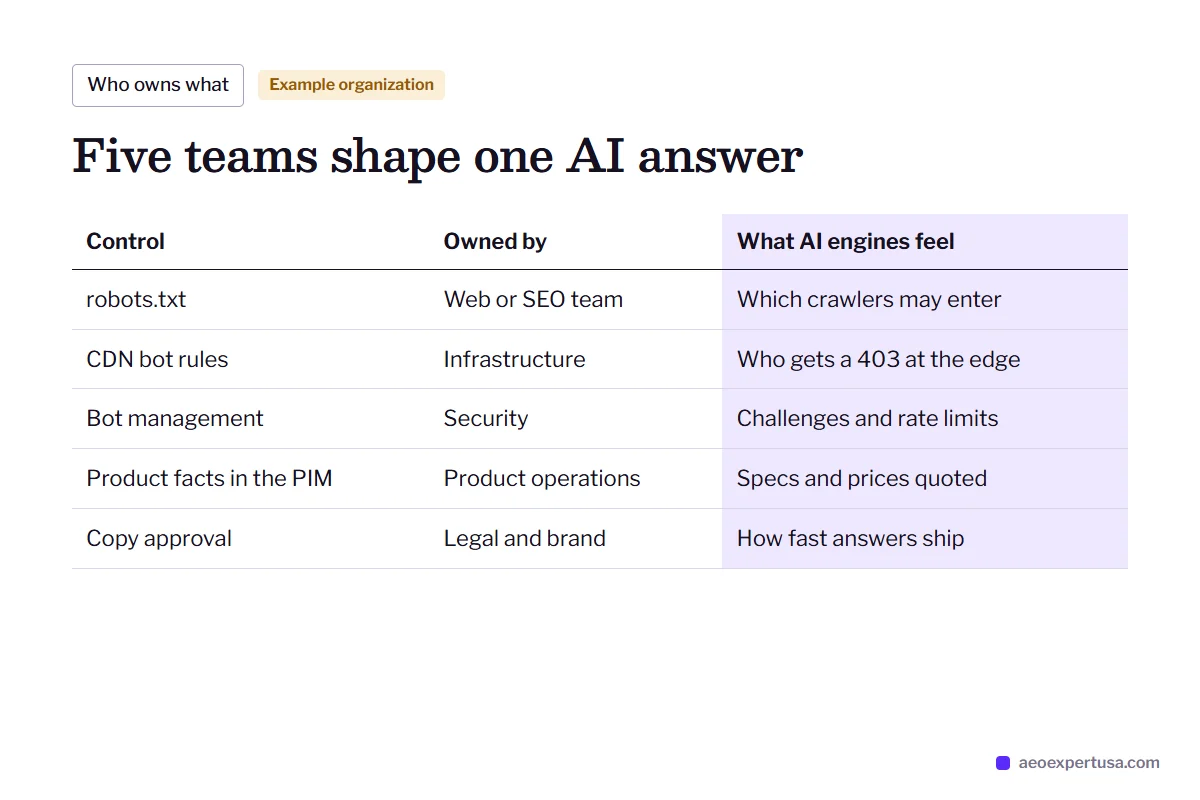
Enterprise-Level AEO Problems
Conflicting crawler rules
Security blocks AI user agents at the edge while marketing wants AI visibility. Nobody has written down which bots should be allowed for which purpose.
Data too big for the UI
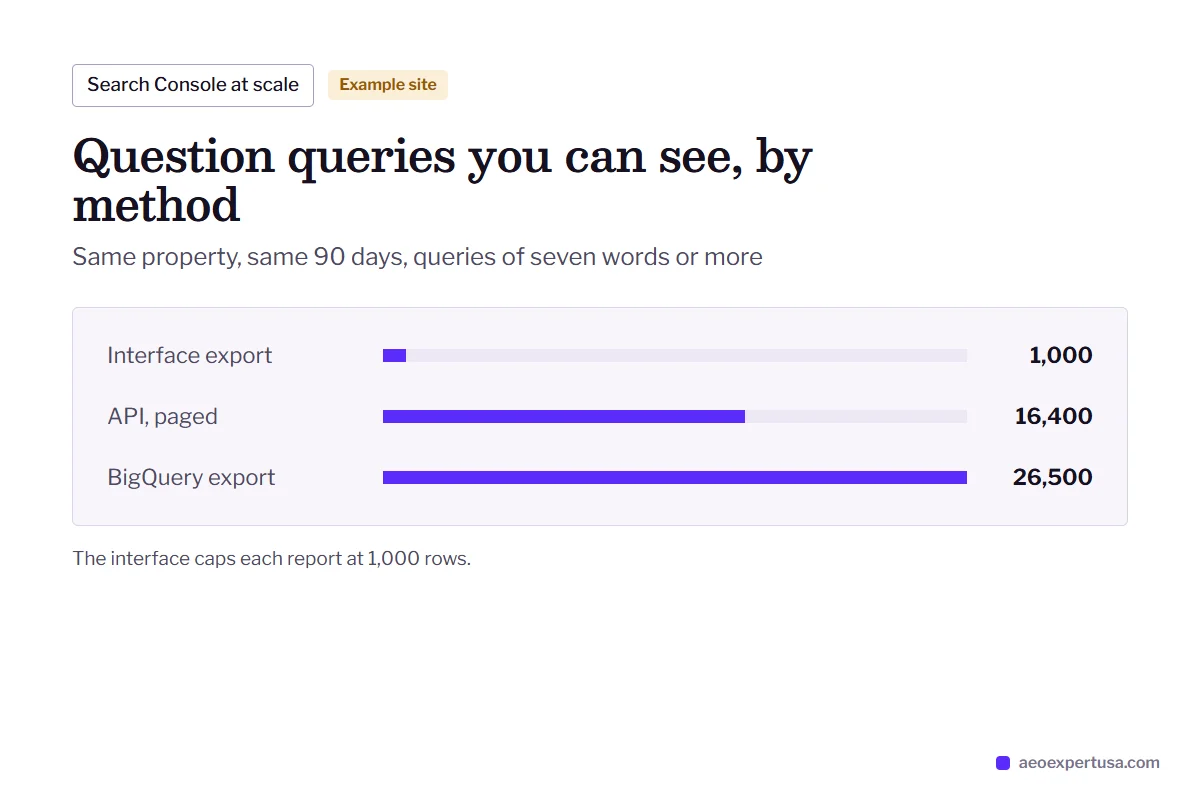
Search Console's interface shows 1,000 rows per report. Large sites need the API or bulk data export to BigQuery to see the long tail of question queries.
Brand and entity confusion
Parent company, sub-brands and products described differently across sites, so AI engines merge or mix them up.
Approvals slow every change
Legal and brand review add weeks. Without pre-approved answer patterns, AEO edits never ship.

Large-Scale AEO Starts With an AI Crawler Policy
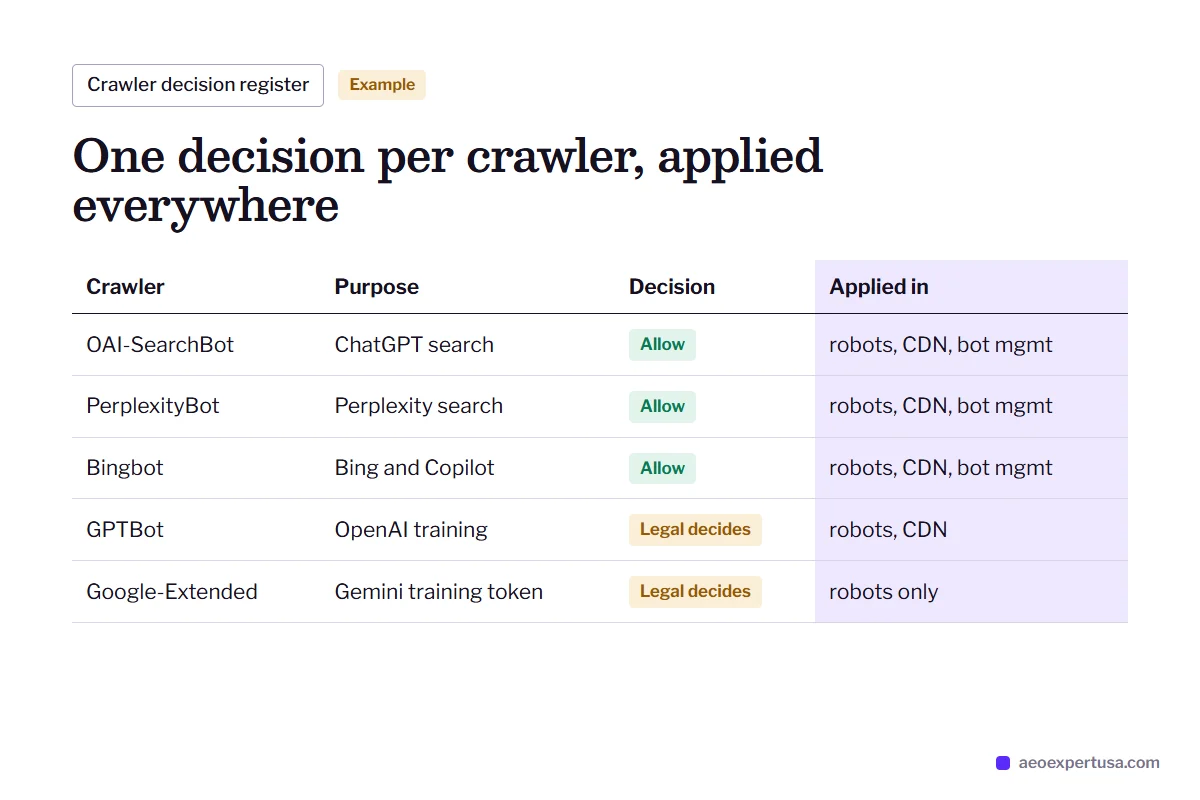
Before any page work, large organizations need a written decision on each AI crawler: allowed for search, allowed for training, or blocked. That decision is then applied the same way in robots.txt, at the CDN and in bot management, for every property.
- Search crawlers and training crawlers treated as separate decisions
- One policy applied across all domains and subdomains
- Logs reviewed monthly to catch rules that drift

Corporate AEO Expert vs an Enterprise AEO Agency
How Enterprise AEO Engagements Run
Scope and access
Weeks 1 to 2Read-only access to Search Console, GA4 and log samples, with NDA and security steps handled on your terms.
Diagnose at scale
Weeks 2 to 5Crawler policy review, log analysis, prompt tests per brand and Search Console data via API or BigQuery.
Roadmap and tickets
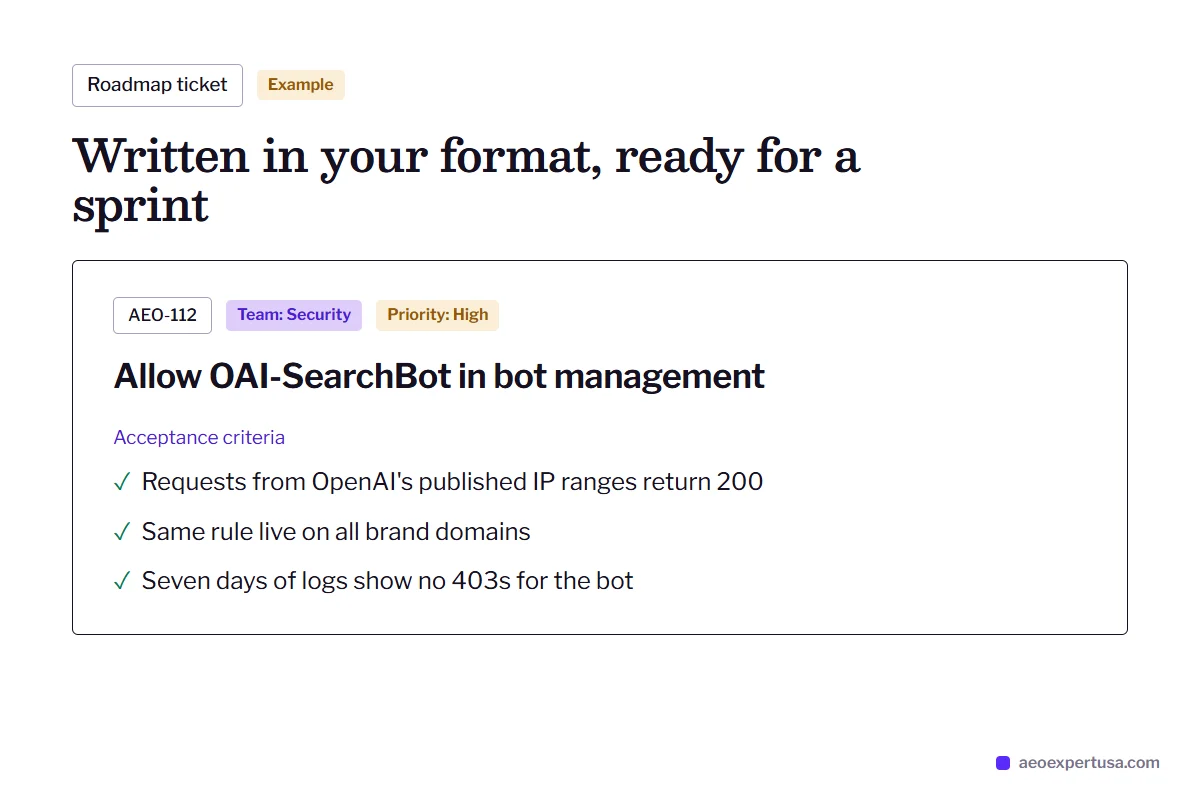
Week 6Prioritized work split by team, written in your ticket format with acceptance criteria.
Advise and verify
OngoingRegular check-ins with each team, fixes verified after release, and a monthly read-out for leadership.

Enterprise AEO Expert Reporting for Leadership
Executives need three numbers they can trust, not a dashboard with forty. Enterprise AEO reporting usually settles on share of AI answers that name each brand for a fixed prompt set, AI referral sessions and conversions from GA4, and the count of open blockers by team.
Each number comes with its method written down: which prompts, how many runs, which engines. That makes the figures defensible when someone asks why they moved, and it stops AI visibility from becoming another vanity metric.
Enterprise AEO Expert FAQs
Can one enterprise AEO expert support a large organization?
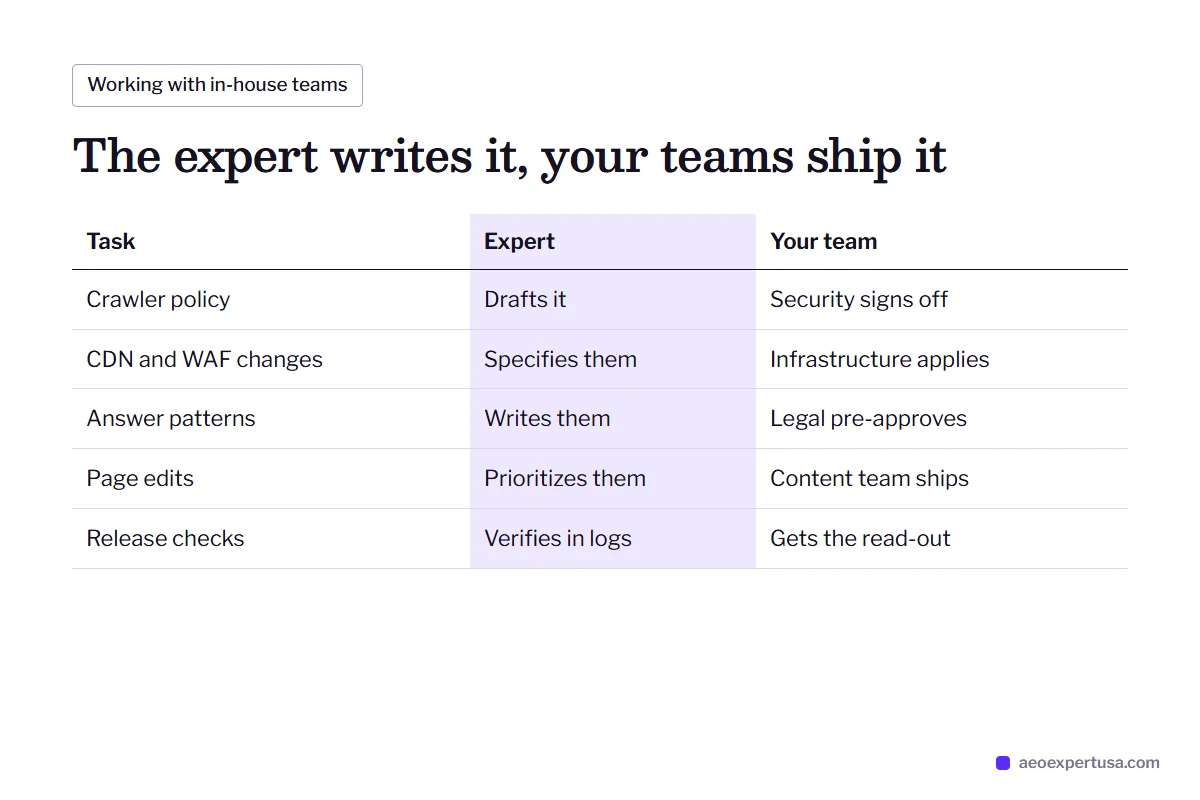
Yes, when the in-house teams do the shipping. The expert sets policy, runs the analysis, writes the tickets and checks the results; your engineers, writers and PR team carry out the changes.
Should enterprises block AI training crawlers?
It is a legal and commercial decision, not a technical one. What matters for visibility is keeping search crawlers such as OAI-SearchBot and PerplexityBot allowed if you want to appear in those answers, whatever you decide about training crawlers like GPTBot.
How do you handle Search Console data for very large sites?
Through the Search Console API or the bulk data export to BigQuery, which go well beyond the 1,000-row limit of the interface. That is where most question-style long-tail queries show up.
Do you work within our security and procurement rules?
Yes. Work can run on read-only access, inside your own tools, under your NDA. Nothing needs to leave your environment except the analysis you approve.
Do you work with Fortune 500 companies?
The service is designed for large organizations with in-house teams, whatever their ranking. The free audit is the easiest way to see whether the fit is right before any procurement steps.
Get a Free Enterprise AEO Audit
Start with one brand or domain. See how AI engines describe it, what blocks them and which team owns each fix.
- Delivered in 48 hours
- Works with read-only access
- No obligation
Request your free AEO audit
Takes 30 seconds. You get a real audit, not a sales sequence.
Make AI recommend your business, starting this week
Hire an AEO expert who works from your data, not guesses.