
Real Estate AEO Expert for Realtors and Brokerages
Buyers ask AI which neighborhoods have an easy commute, sellers ask how long homes take to sell, and investors ask how a 1031 exchange works. A real estate AEO expert makes your local knowledge the source those answers draw on.
- Neighborhood and market pages AI engines can quote
- Agent and brokerage facts consistent across portals and profiles
- Fair housing and licensing rules respected on every page
Which Austin neighborhoods have an easy commute downtown without a car?
Areas close to downtown with frequent bus routes are usually easiest. One agent's neighborhood guide compares commute options:
1hillcountry-homes-example.comCommute facts per area
the source AI citesWhat a Real Estate AEO Expert Does
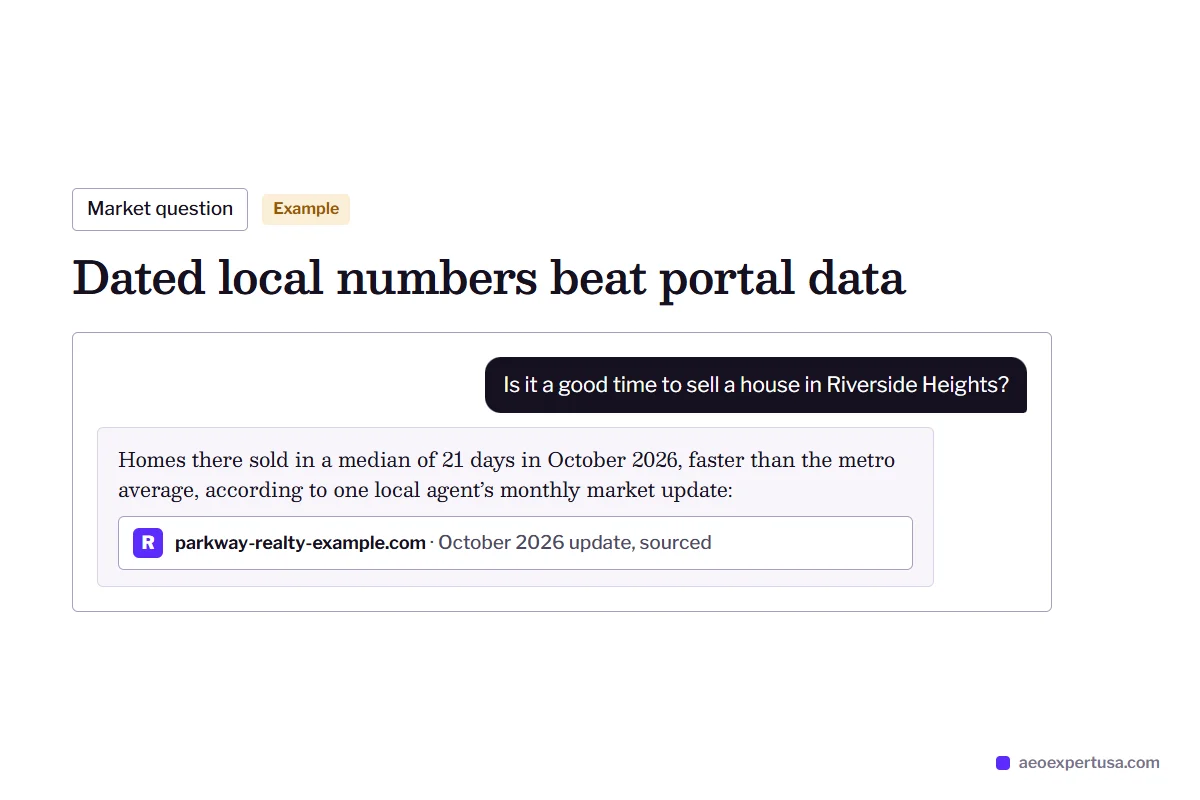
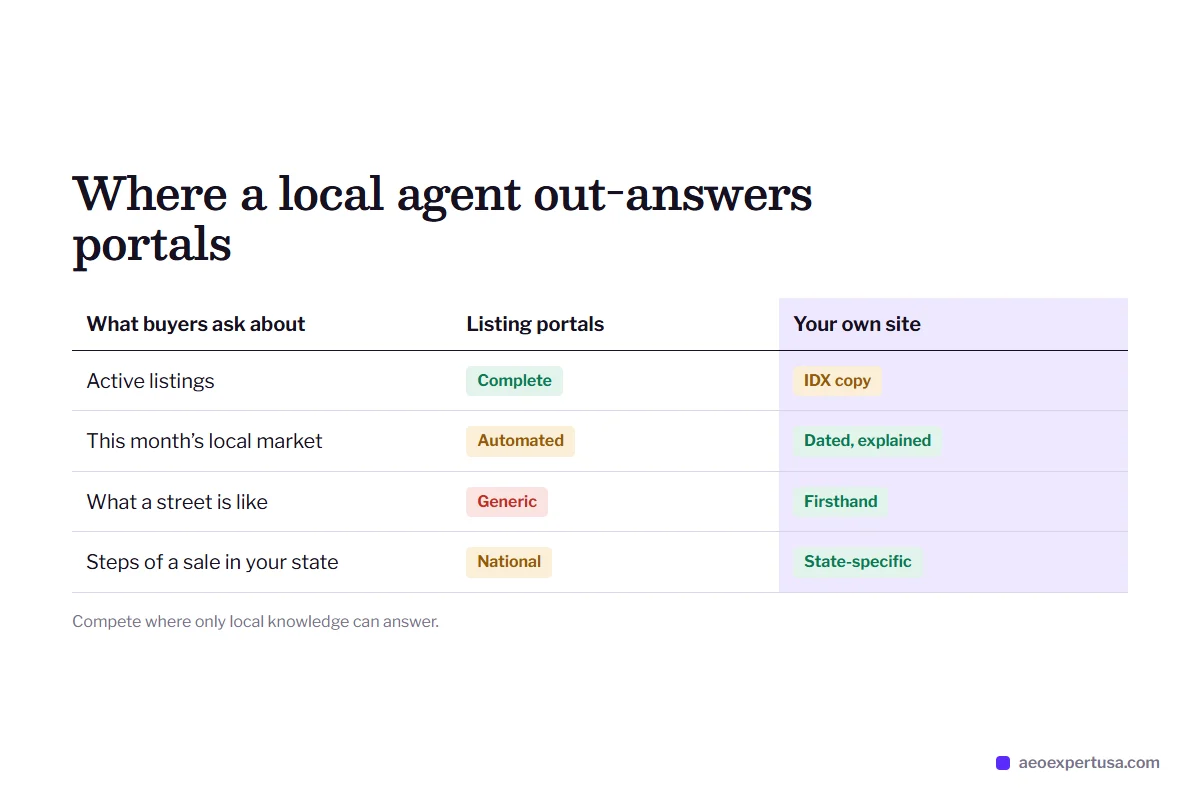
A real estate AEO expert helps agents, brokerages and investors get named and cited when people ask AI tools about neighborhoods, market conditions, the buying and selling process and who to work with. Large portals dominate listing data, so competing on listings alone rarely works. Local knowledge is where an agent can win: what an area is like to live in, how the market is moving, what each step of a sale involves in your state.
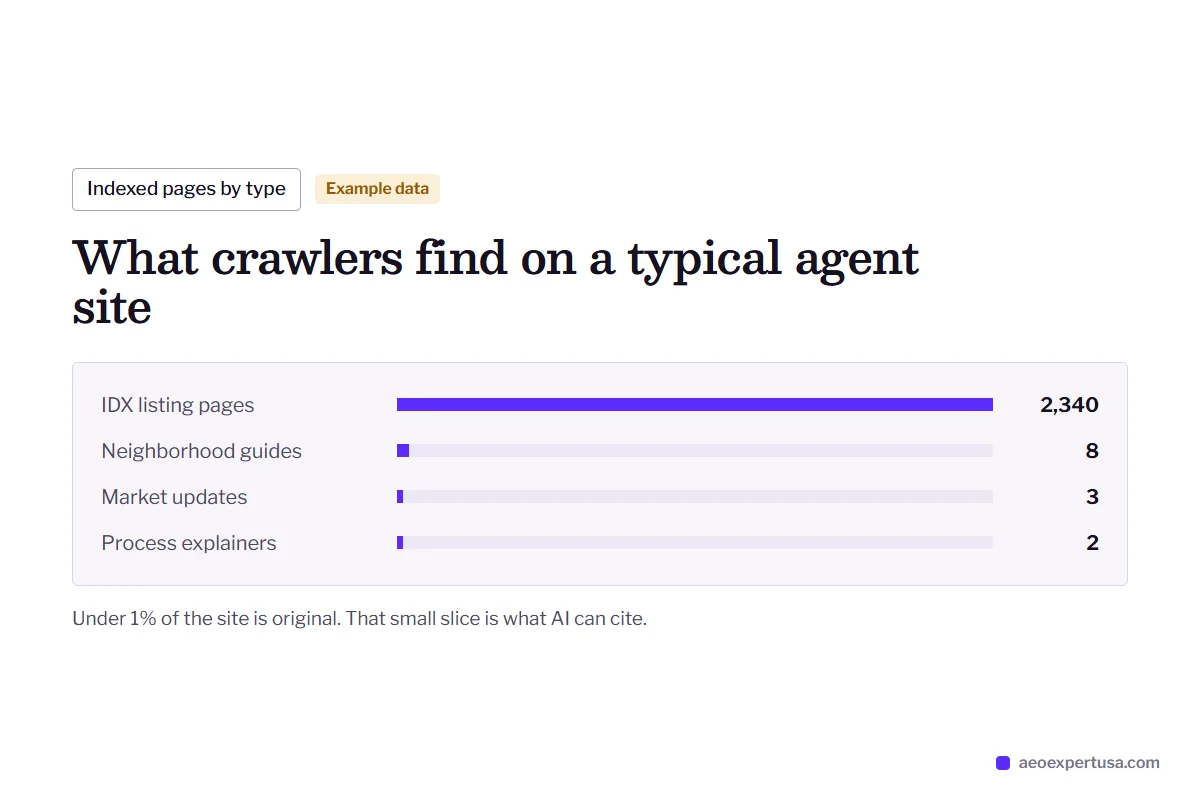
AI engines need that knowledge in a form they can quote: dated market numbers, plain explanations, clear agent credentials and consistent business facts. Many agent websites run on IDX templates with listing pages duplicated across hundreds of sites and a blog that has not changed in years. That is the gap.
Real estate work builds on local AEO and the wider answer engine optimization service, and it starts with a free AEO audit.

Real Estate AEO Expert Work for Agents and Brokers
Six areas where a local agent can out-answer the portals.
Neighborhood guides
Original guides on housing types, commute times, amenities and price ranges, written from local knowledge rather than portal data.
Market updates
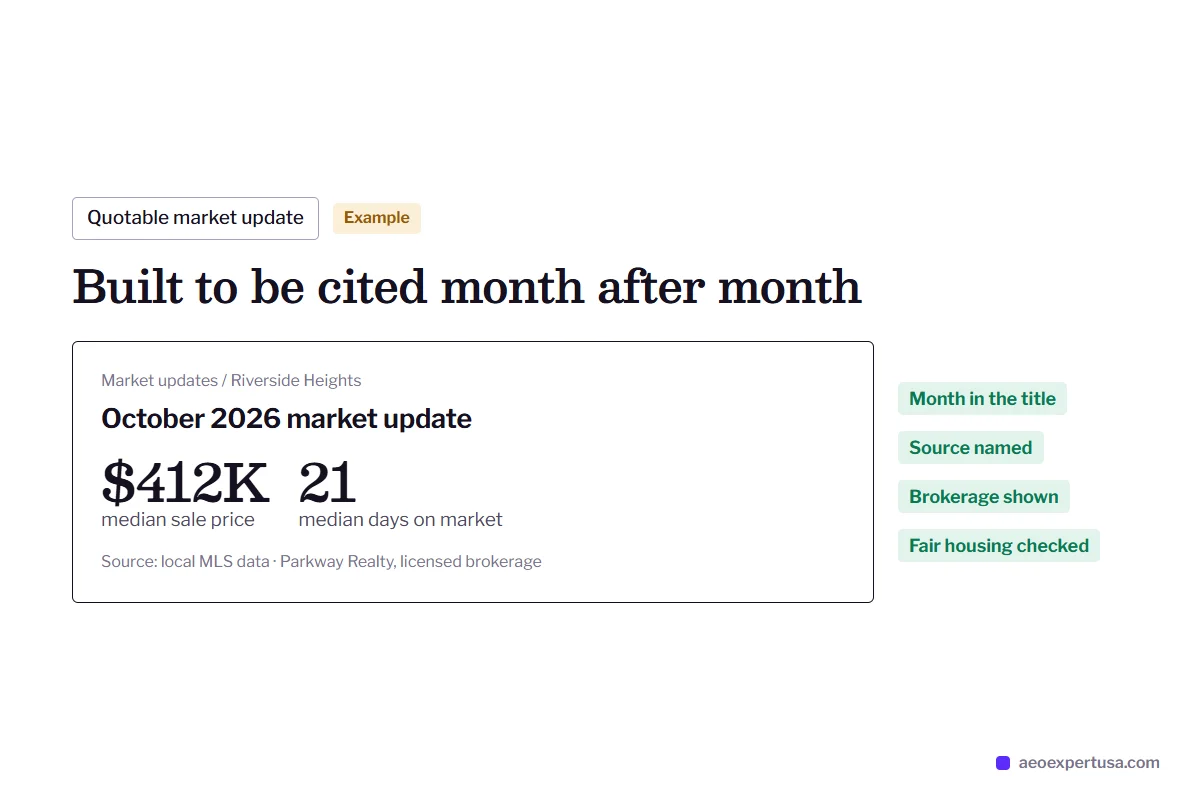
Monthly or quarterly figures for your areas, dated and sourced, so AI answers about the market right now can cite you.
Process explainers
Closing costs, inspection timelines, offer steps and state-specific disclosures explained for buyers and sellers in your market.
Agent entities
Agent and brokerage names, license details and team structure consistent across your site, portals, Google Business Profile and social profiles.
IDX and listing pages
IDX listing pages duplicate portal content. The audit checks they do not crowd out your original pages in crawling and indexing.
Investor content
Rental yields, 1031 exchange basics and property management answers for investors, with tax points sourced and reviewed.

Fair Housing, Licensing and Real Estate AEO
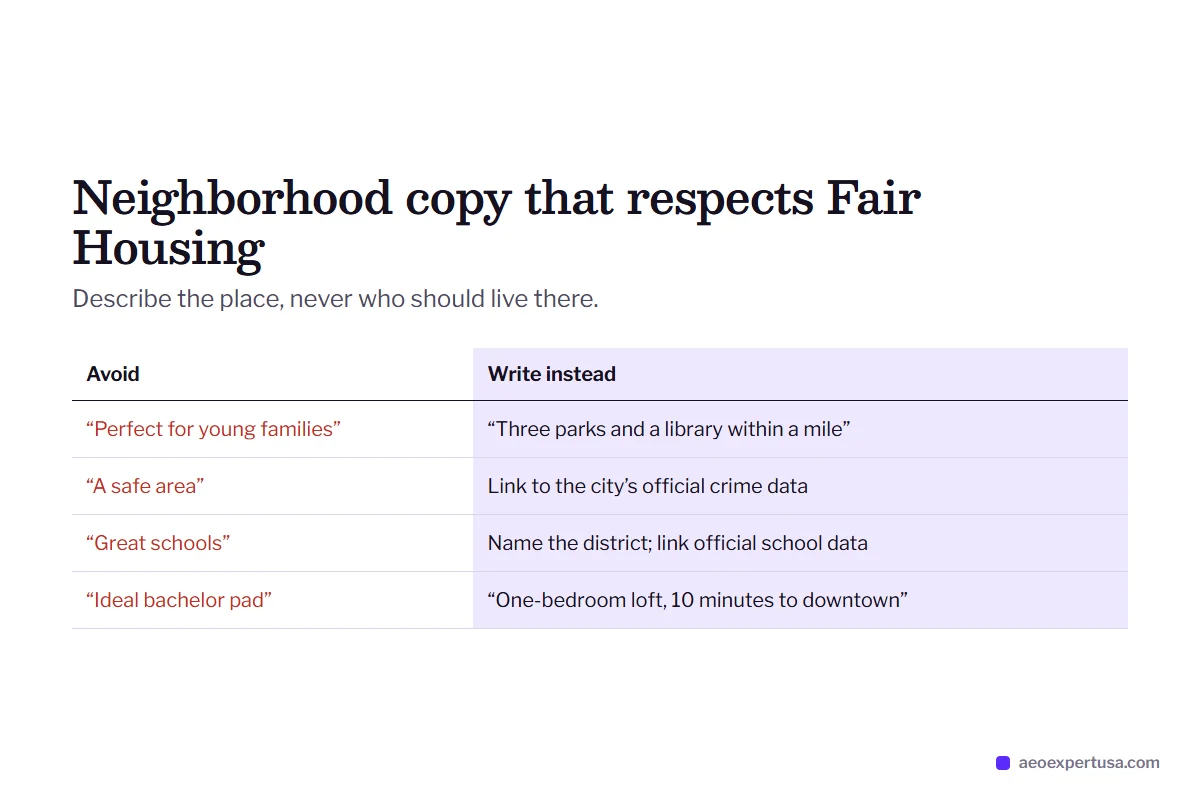
Real estate AEO follows fair housing and license advertising rules. In the US, the Fair Housing Act prohibits advertising that indicates a preference or limitation based on race, color, religion, sex, disability, familial status or national origin, and many states and cities add more protected classes.
That matters most for neighborhood content. Describe places by facts, such as housing stock, commute times, parks and amenities, rather than by who should live there. Avoid “perfect for young families” or “safe area” claims, and point readers to official school and crime data instead. Separately, most states require license details such as the brokerage name in advertising, so check your state's rules for websites.
AI engines quote your sentences without context, so a compliant page is also a safer page to be quoted from.

Why Agents Hire a Real Estate AEO Expert
A typical agent website
- Thousands of IDX listing pages and almost no original content.
- Neighborhood pages copied from a template with the city name swapped.
- Agent names and brokerage details differ across portals and profiles.
- Market posts with no dates, so neither readers nor AI can trust the numbers.
After real estate AEO work
- Original guides and market pages that only a local agent could write.
- Area pages built on real facts: housing stock, commutes, prices, amenities.
- One consistent agent and brokerage record everywhere.
- Dated, sourced market updates on a regular schedule.

How the Real Estate AEO Expert Process Works
Pick your areas
5 minutesChoose the neighborhoods, property types or investor niches you want to be known for.
Audit
Within 48 hoursCrawler access, IDX and indexing, schema, agent facts and live AI tests of local questions.
Build and fix
Month to monthNeighborhood, market and process pages created and checked for fair housing language.
Measure
MonthlyAI referrals, lead forms and citations tracked monthly.

Real Estate AEO Expert FAQs
What does a real estate AEO expert do?
A real estate AEO expert helps agents and brokerages appear in AI answers about neighborhoods, markets, processes and agents. The work covers original local content, agent and brokerage entity data, crawl and index cleanup for IDX sites, and lead tracking.
Can I compete with the big portals in AI answers?
On listings, rarely. On local knowledge, process questions and agent recommendations, yes, because portals cannot easily write first-hand neighborhood guides or explain your state's process from experience. That is where AEO effort is best spent.
Do IDX listings help or hurt AEO?
They help visitors but add little for AI engines, because the same listings appear on many sites. Keep them, but make sure your original pages get crawled and indexed first.
Is AEO useful for real estate investors?
Yes. Investors ask detailed questions about yields, financing, taxes and property management. Clear, sourced answers build authority with AI engines and serious buyers, as long as tax and legal points are reviewed by a qualified professional.
How do fair housing rules affect AI-optimized content?
They apply exactly as they do to any advertising. Describe properties and areas by facts, not by the type of person who should live there, because AI engines may quote any sentence on its own.
Get a Free Real Estate AEO Audit
See which local questions name you, which name portals or other agents, and the first three fixes.
- Delivered in 48 hours
- Built on your market's questions
- No obligation
Request your free AEO audit
Takes 30 seconds. You get a real audit, not a sales sequence.
Make AI recommend your business, starting this week
Hire an AEO expert who works from your data, not guesses.