
Generative Engine Optimization Services for AI-Written Answers
Generative engine optimization services shape the facts, data and pages that large language models combine when they write an answer. The aim is simple: when an AI blends five sources, one of them is yours.
- Built for blended answers in ChatGPT, Gemini, AI Mode, Perplexity and Copilot
- Original facts and statistics that engines want to cite
- Coverage of the follow-up questions AI asks behind the scenes
What Generative Engine Optimization Services Are
Generative engine optimization services are the work of getting your content used and cited when an AI system writes a new answer from several sources. The term GEO came from a 2023 research paper that tested which content changes made a source more visible inside generated answers. Adding citations, quotations and statistics helped most in that study; stuffing keywords did not.
GEO, AEO and the less common AIEO describe the same family of work. People who search for AEO, GEO and AIEO consulting experts usually want one thing: to stop being left out when a buyer asks an AI tool for a recommendation. The difference in emphasis is that GEO focuses on synthesis. A generated answer rarely quotes one page. It blends facts from several, so the goal is to own the facts that make it into the blend.
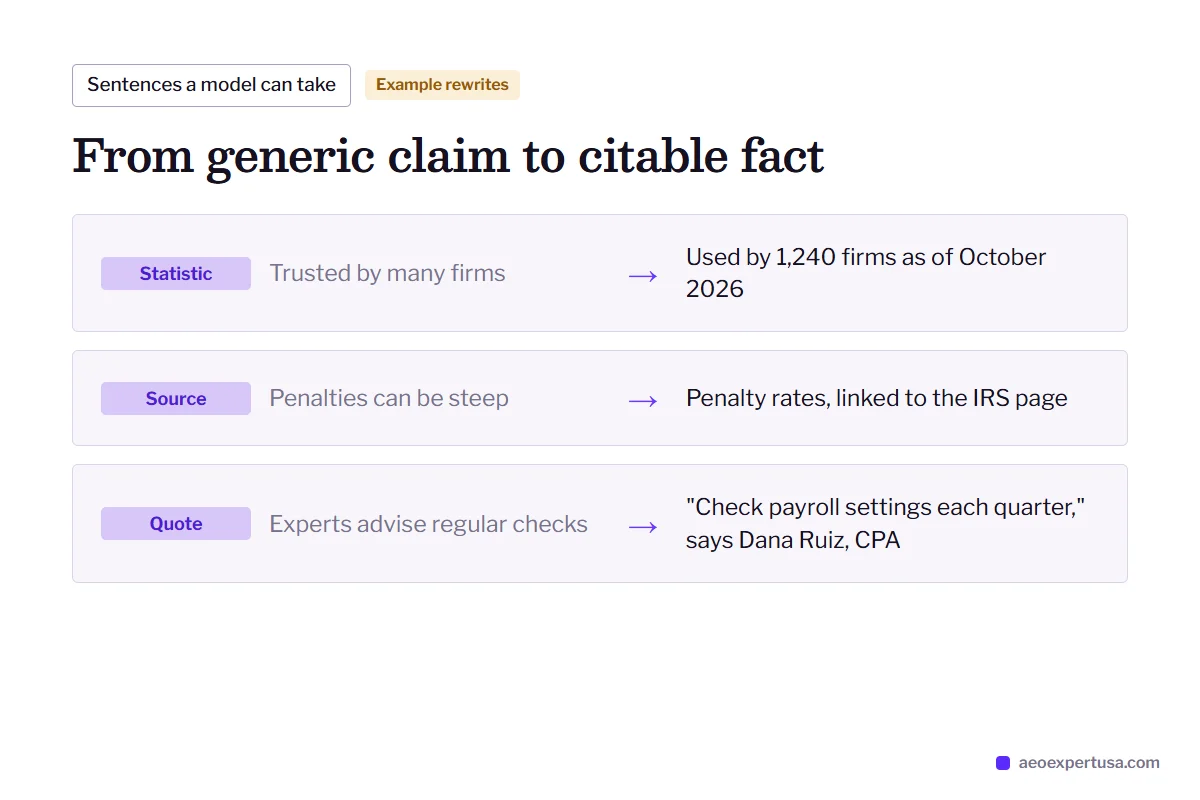
That changes what good content looks like. A page that restates what ten other pages say gives a model nothing new to take. A page with a specific number, a clear definition or a first-hand comparison gives it a reason to cite you.

How GEO Services Cover Query Fan-Out
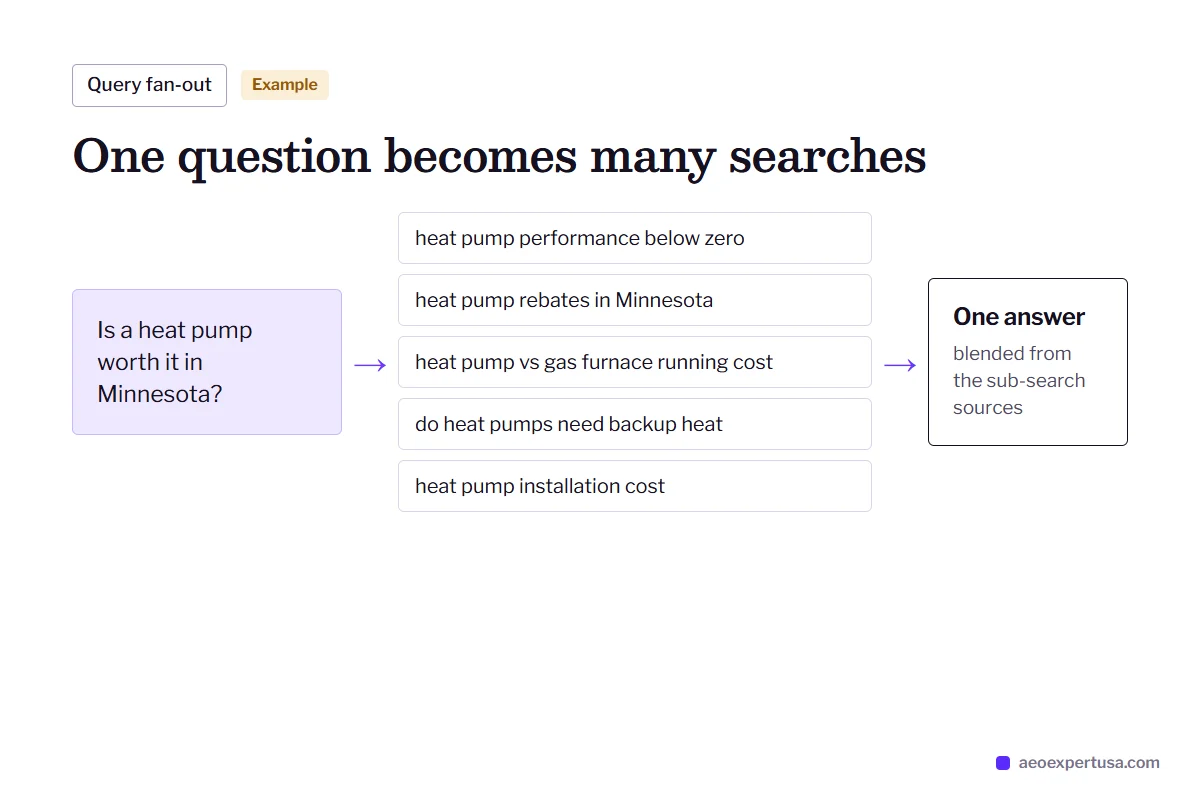
Google has described AI Mode splitting one question into many related searches before it writes a reply, a method it calls query fan-out. Other engines do something similar. You can be missing from the answer even if you rank for the main question, because the sources came from the sub-questions.
- Map the sub-questions behind your most valuable prompts
- Check which of them already return your pages
- Fill the gaps with sections or pages that answer each one directly

What the Generative Engine Optimization Service Delivers
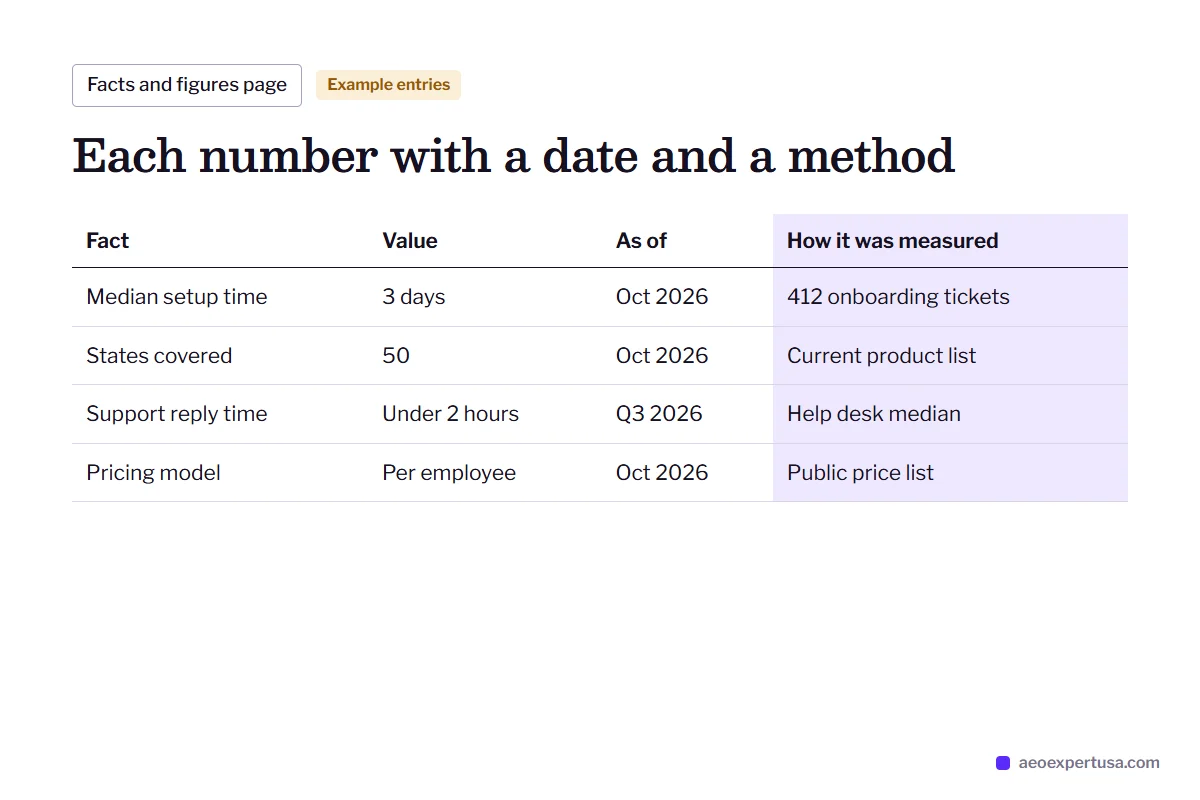
A facts and figures page
Your own numbers in one citable place: pricing model, coverage, turnaround, survey results or usage data, each with a date and method.
Citation-ready formatting
Definitions in one sentence, short attributed quotes from named experts, and sources linked inline so a model can check the claim.
Consistent brand facts
Your name, category, founding facts and product list aligned across your site, profiles and directories, so models stop mixing you up with others.
A fan-out coverage map
The sub-questions behind your top prompts, with the page that should answer each one and its current status.

How the GEO Service Works
Prompt and source baseline
Week 1Your priority prompts run across several engines, with every cited source recorded, yours and competitors'.
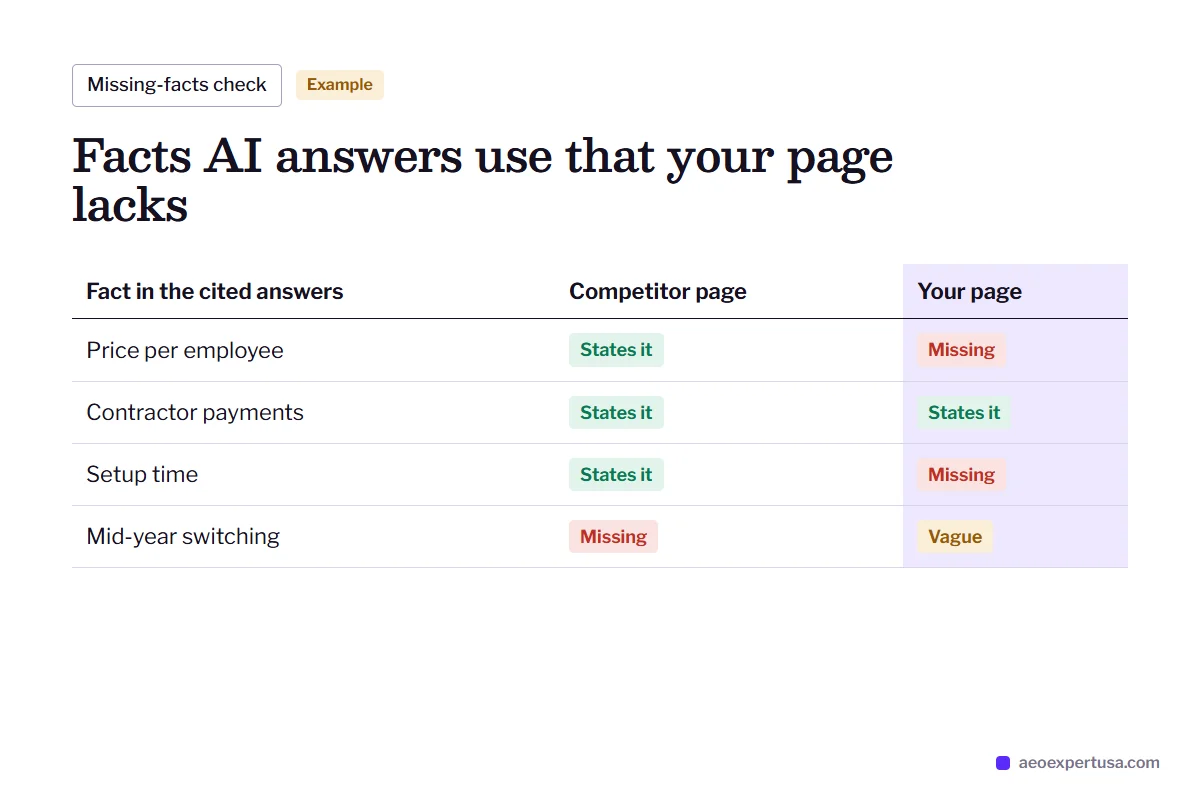
Find the missing facts
Week 2Compare what the cited sources say that your pages do not. That gap becomes the content plan.
Publish and align
Months 1 to 2New facts, data and sections go live, and brand details are corrected on the profiles models read.
Re-test
MonthlyThe same prompts are re-run on a schedule, several times each, because generated answers vary between runs.

Generative Engine Optimization Agency vs an Independent GEO Expert

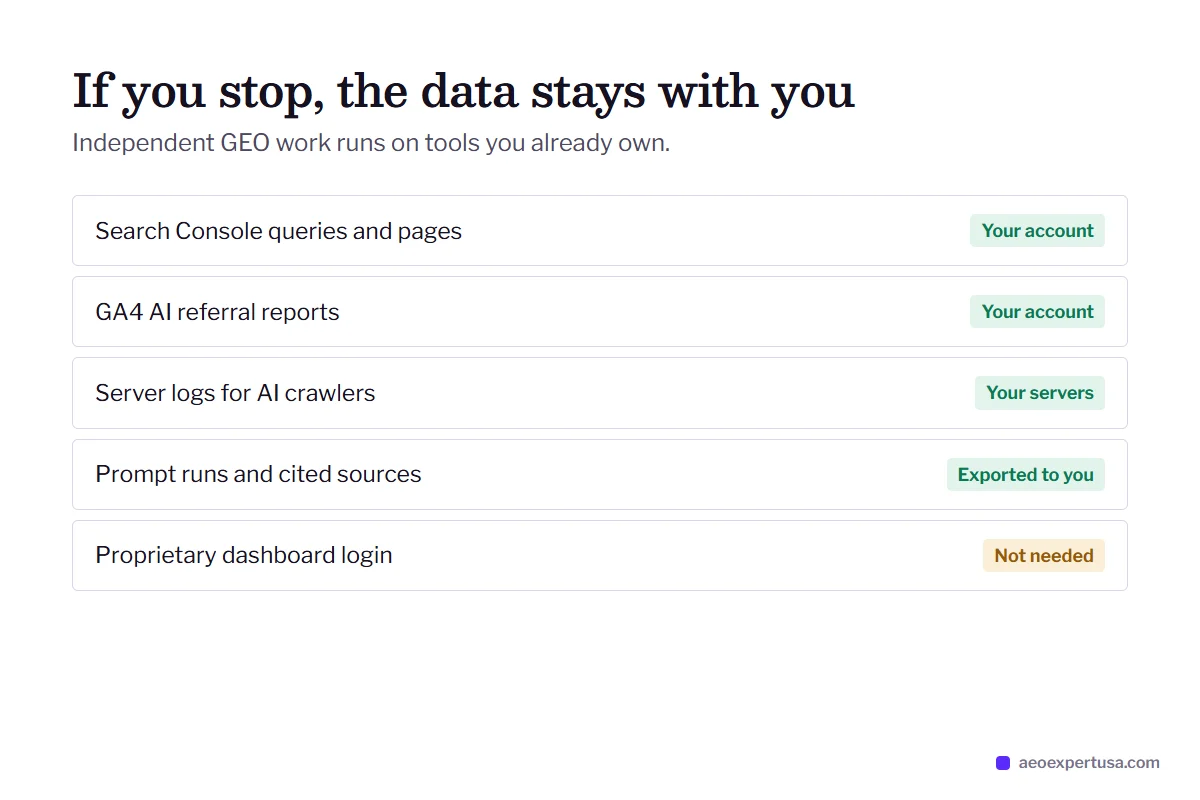
GEO Tactics This Generative Engine Optimization Company Avoids
Sold elsewhere
- Hidden text or instructions written for AI crawlers.
- Hundreds of thin AI-written pages targeting every prompt.
- Paid placements on listicles dressed up as editorial.
- Fake or incentivized reviews to sway AI summaries.
Done instead
- Visible content that says the same thing to people and machines.
- Fewer pages, each with facts nobody else publishes.
- Earned mentions on sources that already cover your category.
- Real review requests to real customers, with nothing offered in return.
Generative Engine Optimization Services FAQs
Is GEO different from AEO?
Mostly in emphasis. AEO grew out of featured snippets and voice answers, while GEO focuses on answers that are written fresh from several sources. The day-to-day work, crawler access, clear answers and trusted mentions, is largely the same.
Which engines do generative engine optimization services cover?
ChatGPT, Google AI Overviews and AI Mode, Gemini, Perplexity, Microsoft Copilot and Claude. The engines your buyers actually use get the most attention, which the baseline test shows.
Do I need original research for GEO?
It helps a lot but it does not need to be a big study. A table of your real turnaround times, a pricing breakdown or anonymized usage figures can all be cited, as long as they are specific and dated.
How do you measure a GEO campaign?
By re-running a fixed set of prompts on each engine several times a month and recording whether you are named and which URL is cited. AI referral sessions in GA4 and Search Console trends sit alongside that.
Does llms.txt help with GEO?
Possibly a little, and it costs almost nothing to add. llms.txt is a proposed standard from llmstxt.org and no major engine has confirmed using it for citations, so treat it as optional.
Get a Free Audit for Generative Engine Optimization Services
See which sources AI engines blend for your top questions, and which facts would earn you a place among them.
- Delivered in 48 hours
- Prompt baseline included
- No obligation
Request your free AEO audit
Takes 30 seconds. You get a real audit, not a sales sequence.
Make AI recommend your business, starting this week
Hire an AEO expert who works from your data, not guesses.