
AEO Strategy Built From Your Search Console Data
An AEO strategy decides which questions you should own in AI answers, which engines matter for your buyers, and what to fix, write and earn first. It is built from your own data, so the plan fits your site rather than a template.
- Question research from Search Console, sales calls and support
- Engines ranked by where your buyers actually ask
- A 90-day roadmap with owners and measures
What an AEO Strategy Includes
An AEO strategy is a written plan that links the questions your buyers ask AI to specific pages, fixes and outside sources, in priority order. It answers four things: which questions matter, which engines matter, what stops you being cited today, and what to do about it in the next 90 days.
It is different from an audit. An AEO audit finds what is broken. A strategy decides what to build, using the audit as one input alongside your sales data, your competitors' citations and your team's capacity. If you have one writer and no developer time, the plan says so and works within it.
The strategy suits in-house teams who want to run the work themselves with an organic AEO expert setting direction, and companies that want the plan first before deciding who executes it.

How the AEO Strategy Is Built
Collect questions
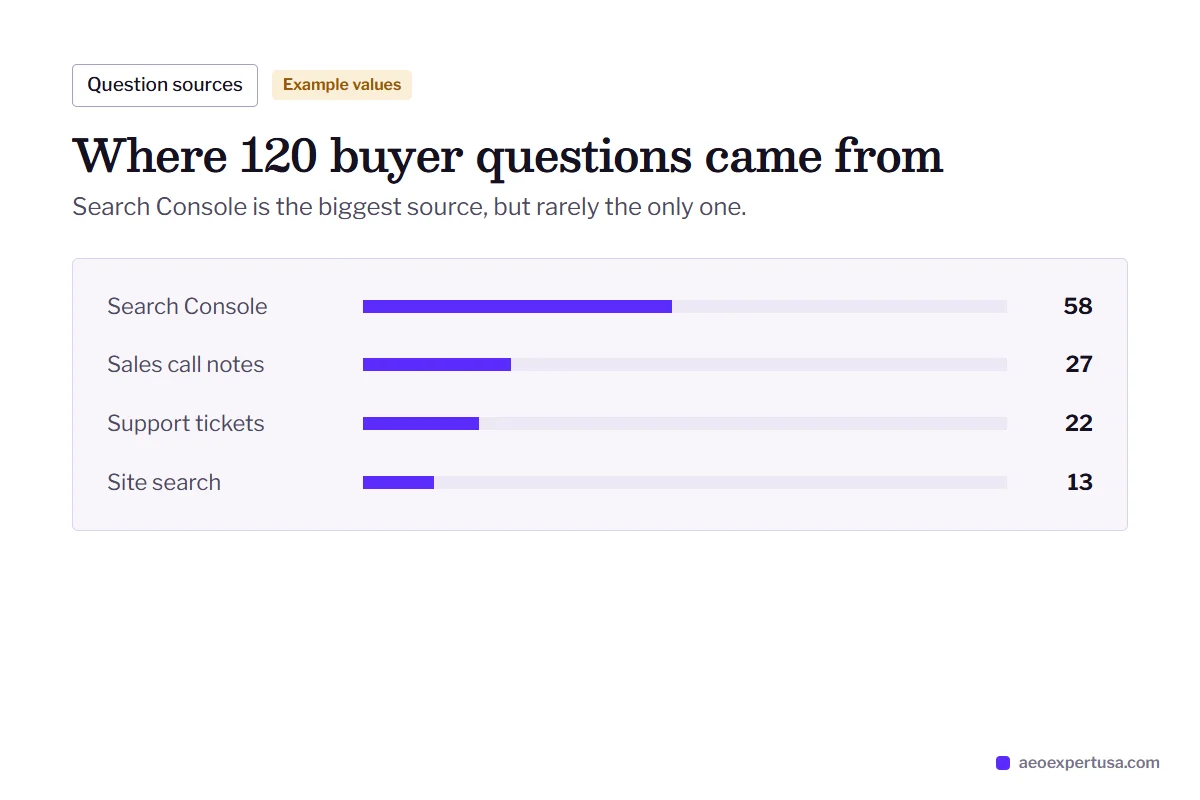
Week 1Search Console queries, sales call notes, support tickets and on-site search terms, merged into one question list.
Test the engines
Week 1The top questions run in ChatGPT, AI Overviews, Perplexity and Copilot, with every cited source recorded.
Score the gaps
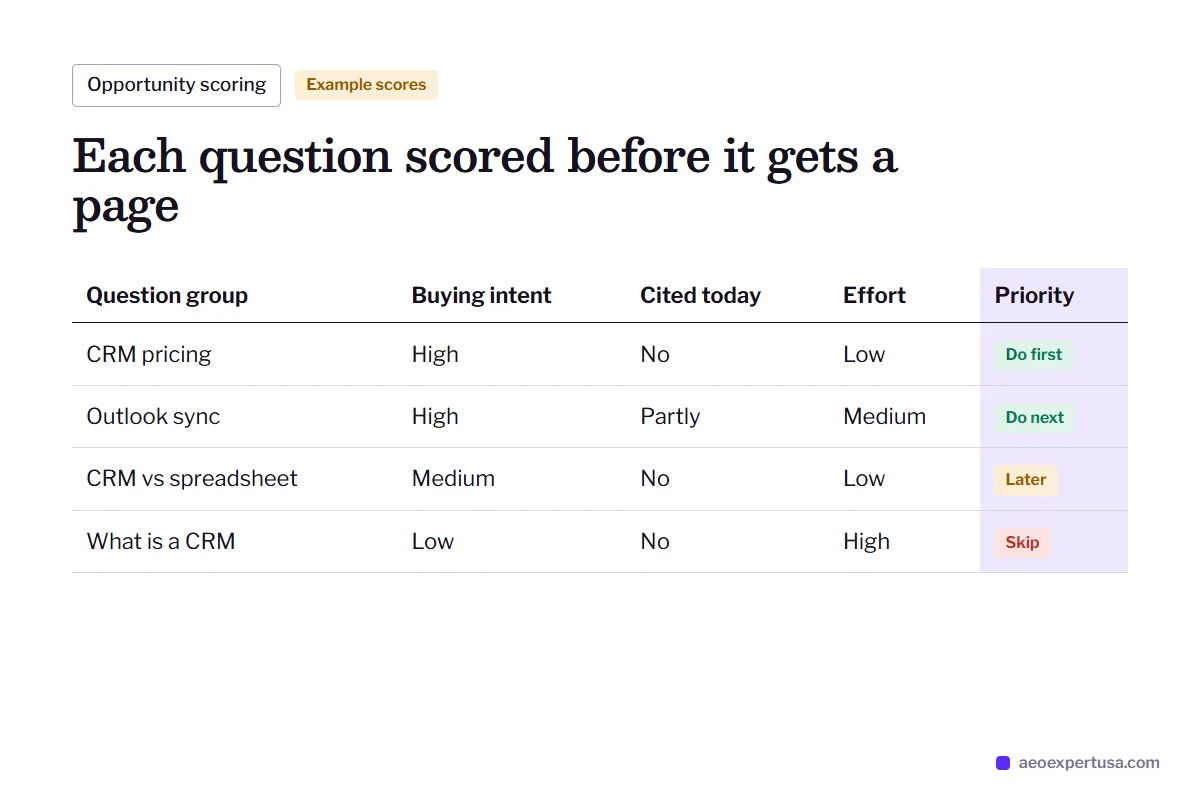
Week 2Each question scored on buying intent, current presence and effort to win, then grouped into pages.
Write the roadmap
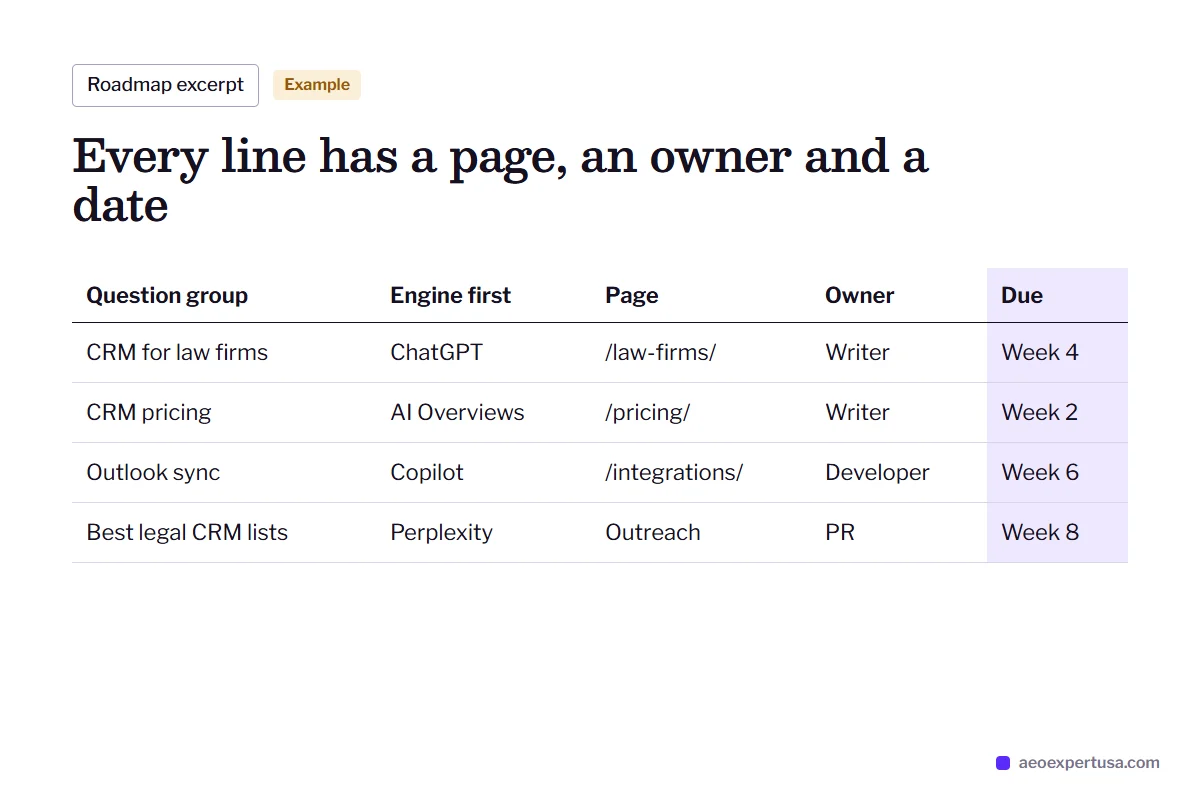
Week 3A 90-day plan with owners, deadlines and the measure for each item, walked through on a call.

Keyword Research for AEO: Mining Search Console for Questions
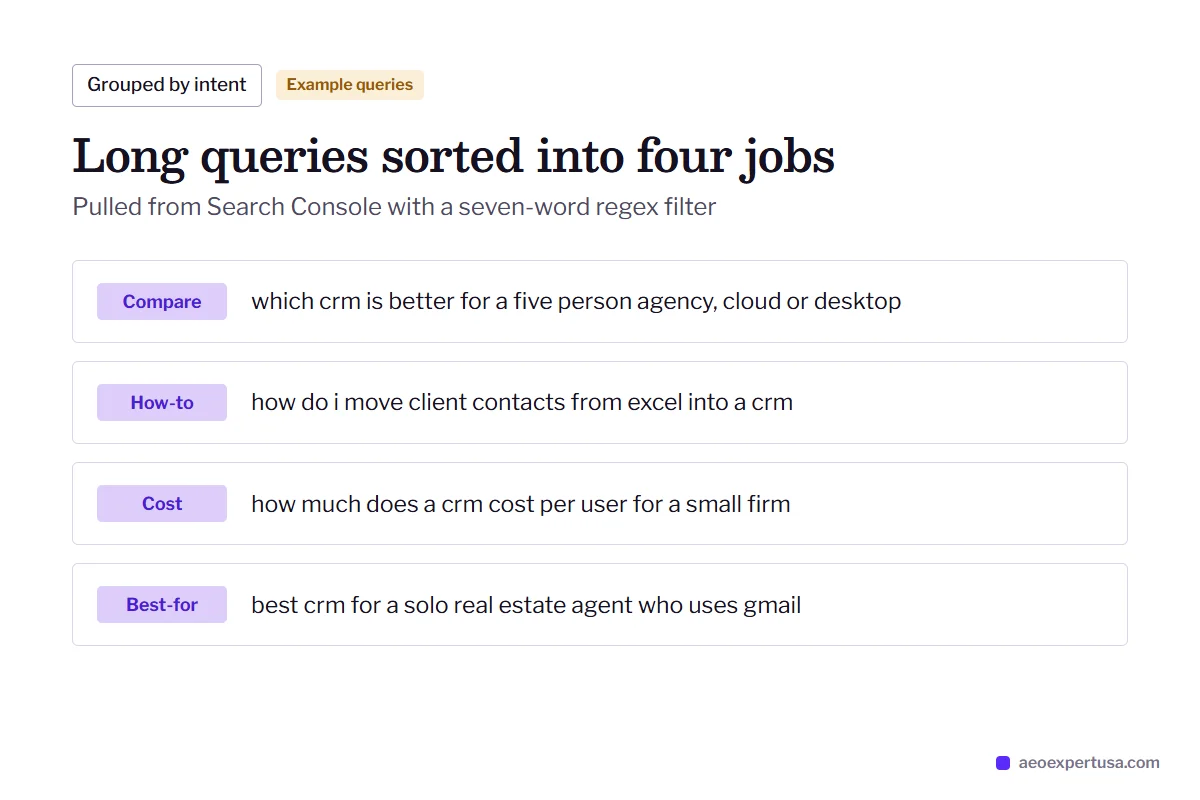
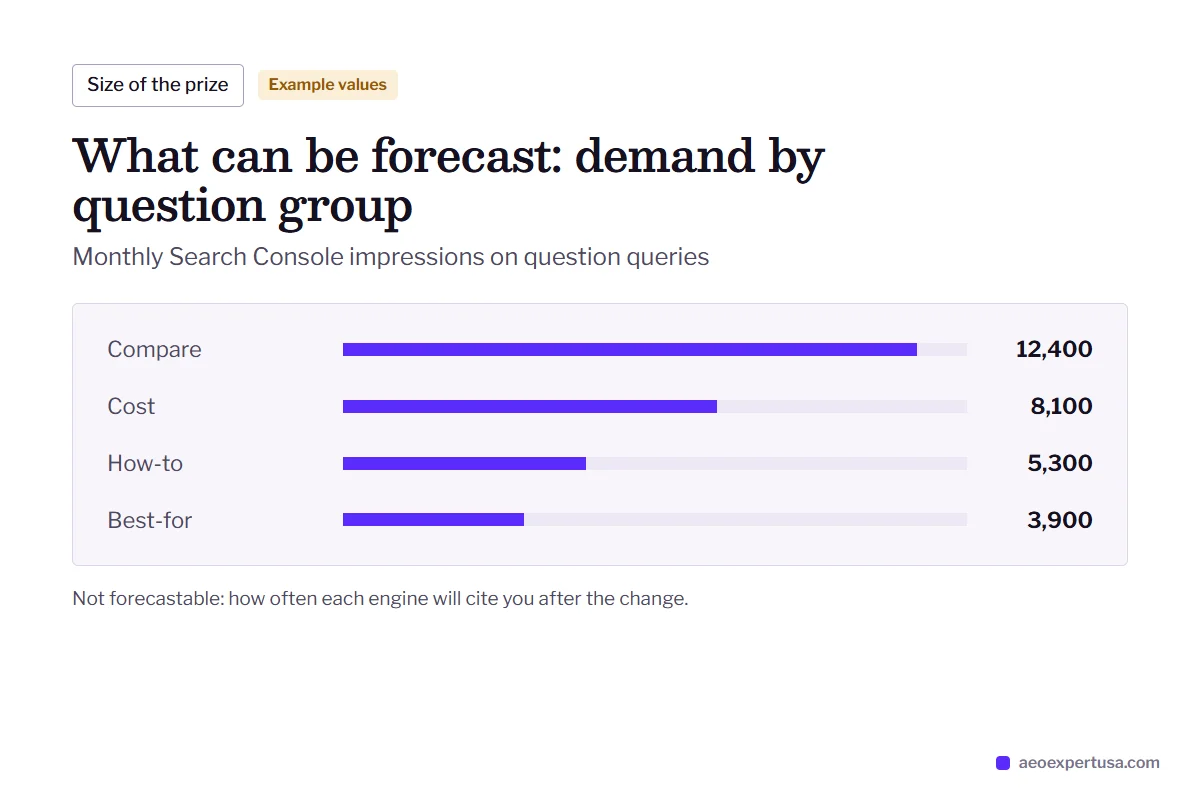
Your Search Console data already holds the long, conversational queries people now type and speak. A regex filter on query length pulls them out, and they read like the prompts buyers give AI engines.
- Queries of seven words or more, filtered with regex
- Grouped by intent: compare, how-to, cost, best-for
- Matched to the page that should answer each group

Data-Driven AEO Strategy Decisions
The calls a data-driven expert AEO plan makes explicit, so nobody guesses later.
Which engines first
B2B buyers and consumers use different assistants. GA4 referrals and buyer interviews decide the order.
Fix, merge or build
Whether an existing page can win a question or a new page is needed, and which weak pages to merge.
Entity basics
How you describe your company and products, written once and used everywhere.
Outside sources
Which review sites, lists and publications already get cited for your questions.
Who does what
Tasks matched to your writers, developers and PR people, with realistic hours.
How you will measure
The prompt set, the GA4 and Search Console views, and the review dates.

AEO Forecasting: What a Strategy Can and Cannot Predict
AEO forecasting can estimate the size of the prize, not the result. Search Console shows how many impressions your question queries get today, and GA4 shows how much AI referral traffic converts. That is enough to rank opportunities by value and set sensible ranges.
What nobody can forecast with confidence is how often a specific engine will cite you after a change. Answers vary between runs, engines update without notice, and competitors move too. So the strategy sets measurable checkpoints instead of promises: crawler access fixed by week two, pages published by week six, mention rate re-tested at week twelve.

Conversion Rate Optimization for AEO Traffic
Where AI visitors drop off
- They land on a deep page with no clear next step.
- The page repeats what the AI already told them.
- Pricing or availability is hidden behind a form.
- The page contradicts what the AI said about you.
What the strategy adds
- A clear next step on every page AI engines cite.
- Detail the AI summary left out: specifics, examples, proof.
- Plain pricing or a clear way to get it.
- Facts kept consistent between your pages and AI answers.
AEO Strategy FAQs
What is an AEO strategy?
An AEO strategy is a prioritized plan for getting your business named and cited in AI answers. It connects buyer questions to pages, fixes and outside sources, with owners and measures for each step.
Can our team carry out the strategy ourselves?
Yes. The roadmap is written for your team's skills and time. You can add a monthly check-in or hand parts of the work back if you get stuck.
How is this different from an SEO strategy?
It uses many of the same inputs but optimizes for being quoted, not just ranked. That shifts priorities toward direct answers, specific facts, crawler access for AI user agents and mentions on the sources AI engines cite.
How often should an AEO strategy be updated?
Review it every quarter. Buyer questions, engine behavior and competitors change quickly enough that a plan older than six months is usually out of date.
Start Your AEO Strategy With a Free Audit
The audit shows where you stand in AI answers today, which is the starting point for any plan.
- Delivered in 48 hours
- Includes your top question gaps
- No obligation
Request your free AEO audit
Takes 30 seconds. You get a real audit, not a sales sequence.
Make AI recommend your business, starting this week
Hire an AEO expert who works from your data, not guesses.